paper preview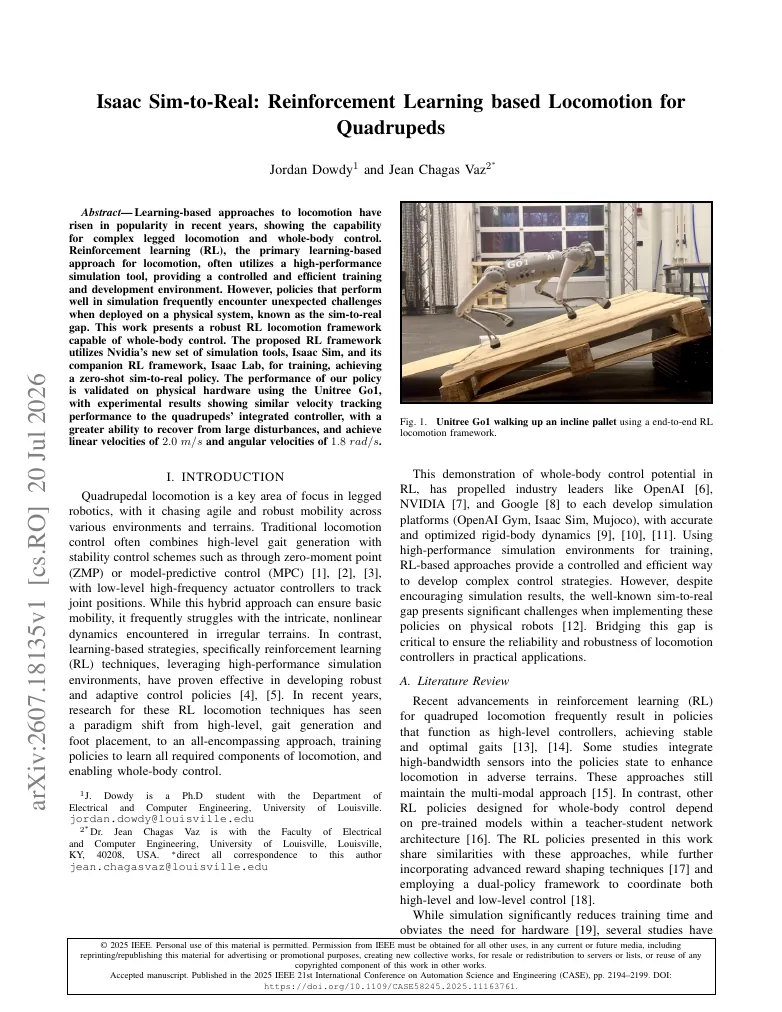
01arXiv
Isaac Sim-to-Real: Reinforcement Learning based Locomotion for Quadrupeds
Teaches a Unitree Go1 to walk from Isaac Lab simulation by shaping rewards, modeling actuators, and testing push recovery.
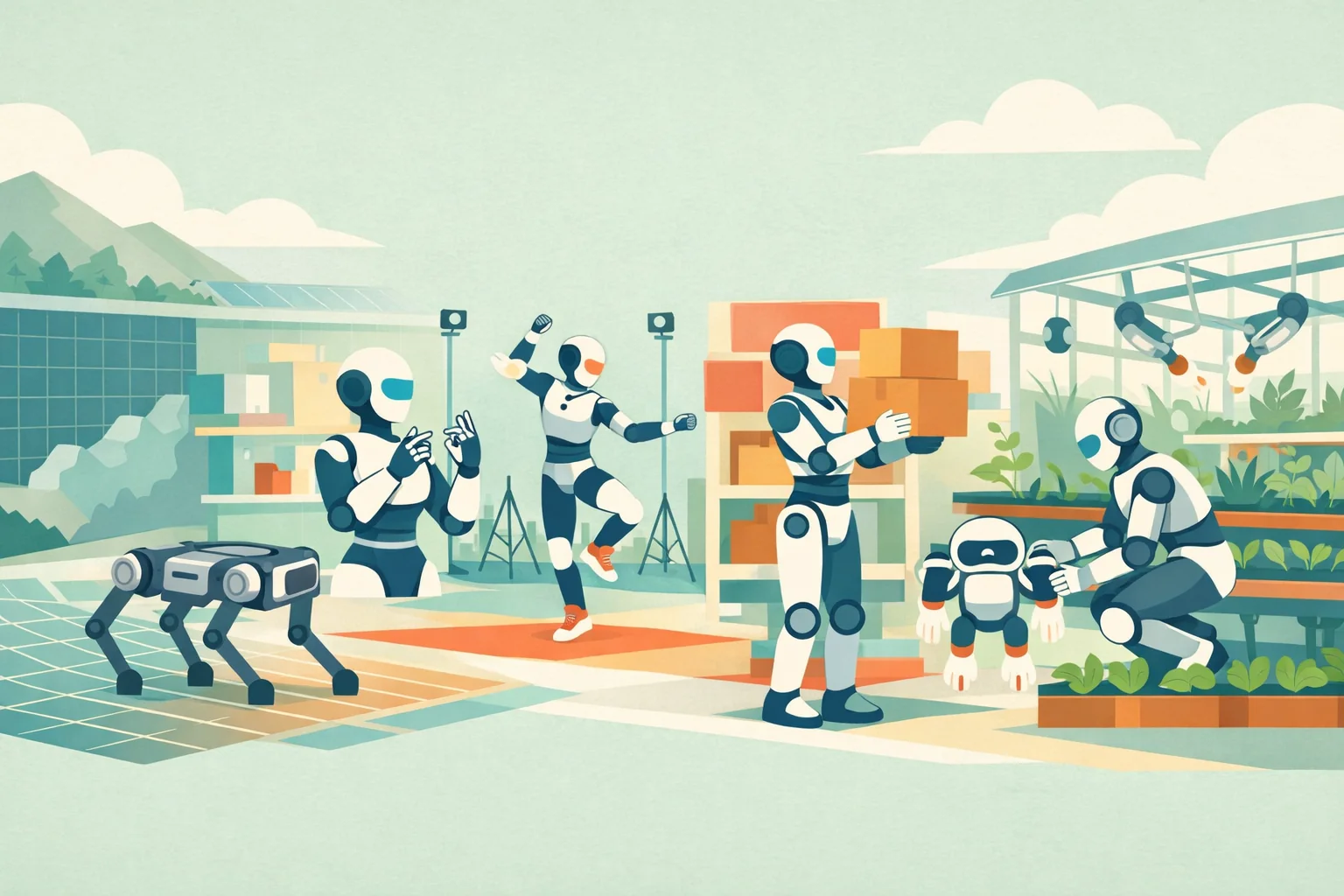
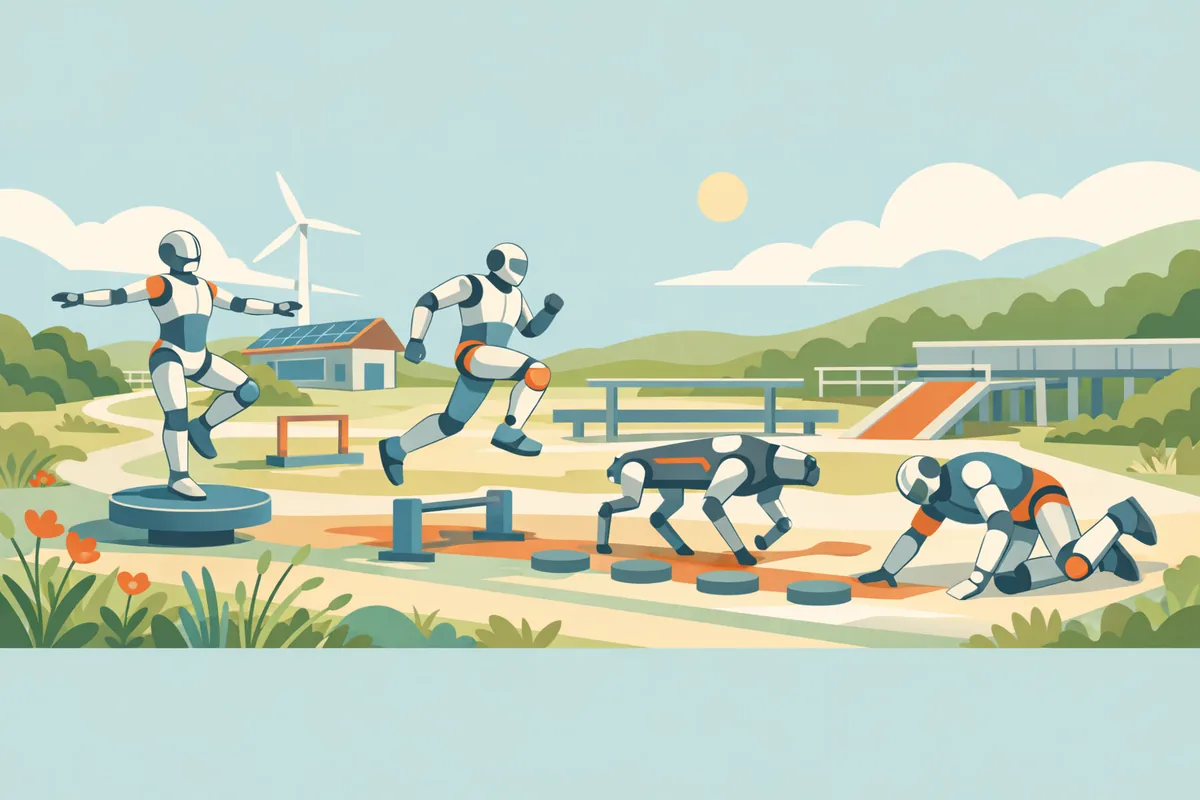
Terrain, gait, robustness, and agile movement.
Teaches a Unitree Go1 to walk from Isaac Lab simulation by shaping rewards, modeling actuators, and testing push recovery.
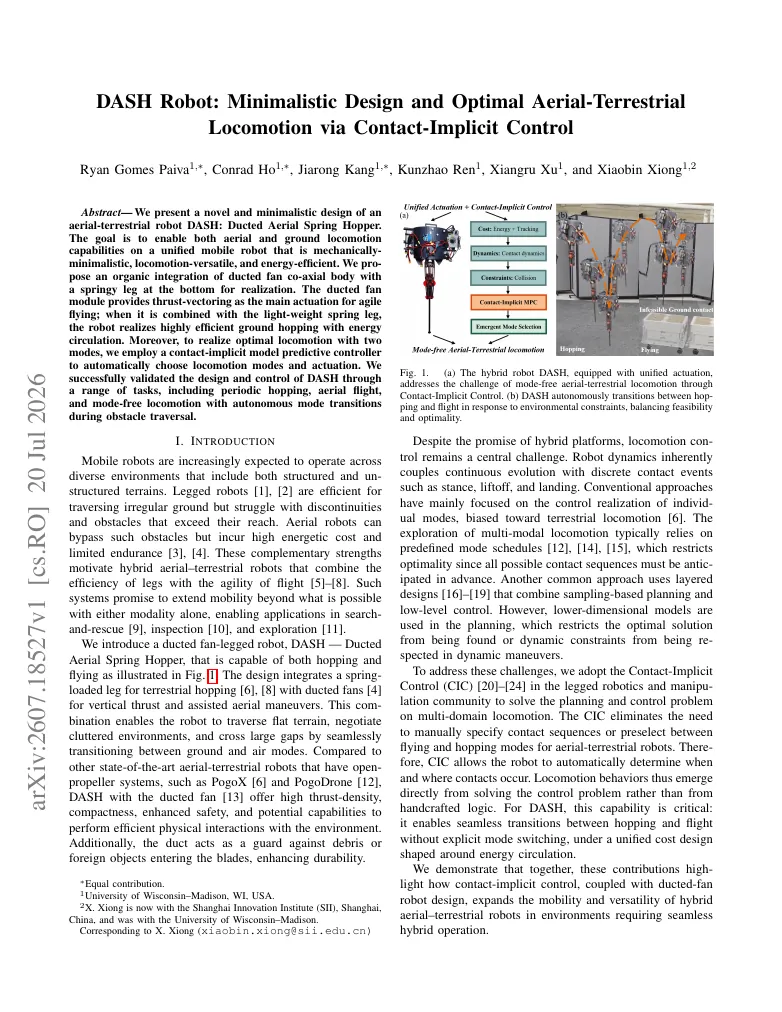
Builds a small robot that can hop and fly, with a controller that chooses when to use ground contact or thrust.
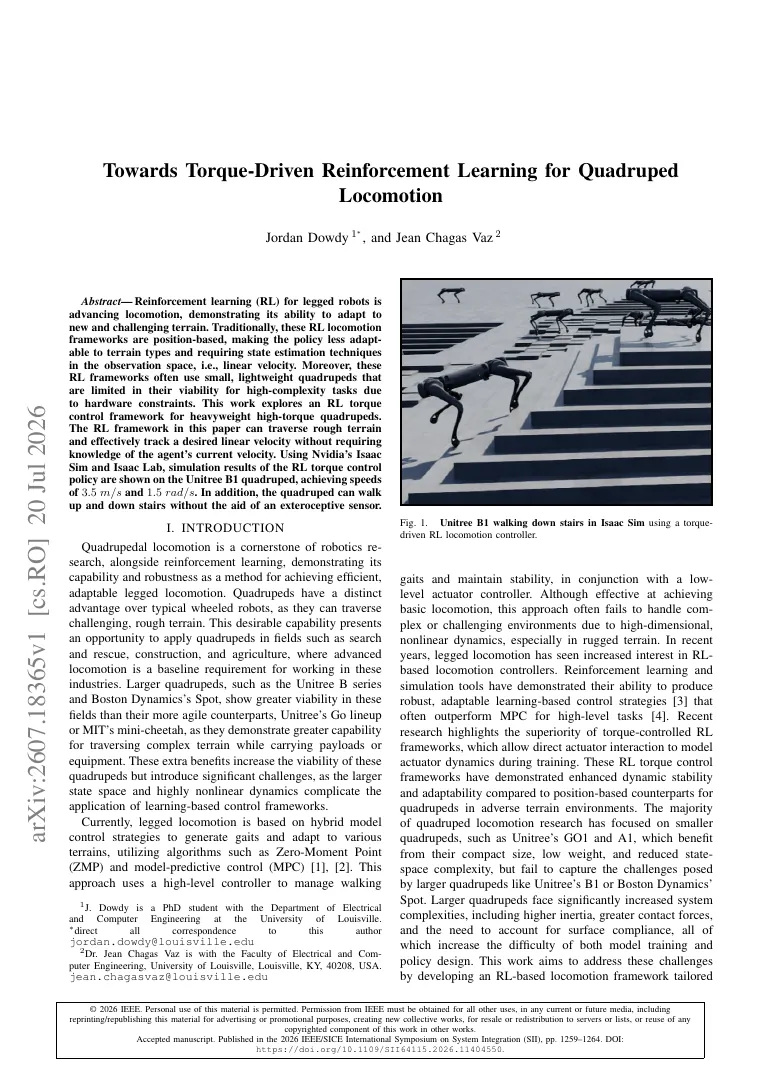
Trains a Unitree B1 quadruped to walk using direct torque commands instead of position targets or velocity sensing.
Reference motion, imitation, retargeting, and behavior priors.
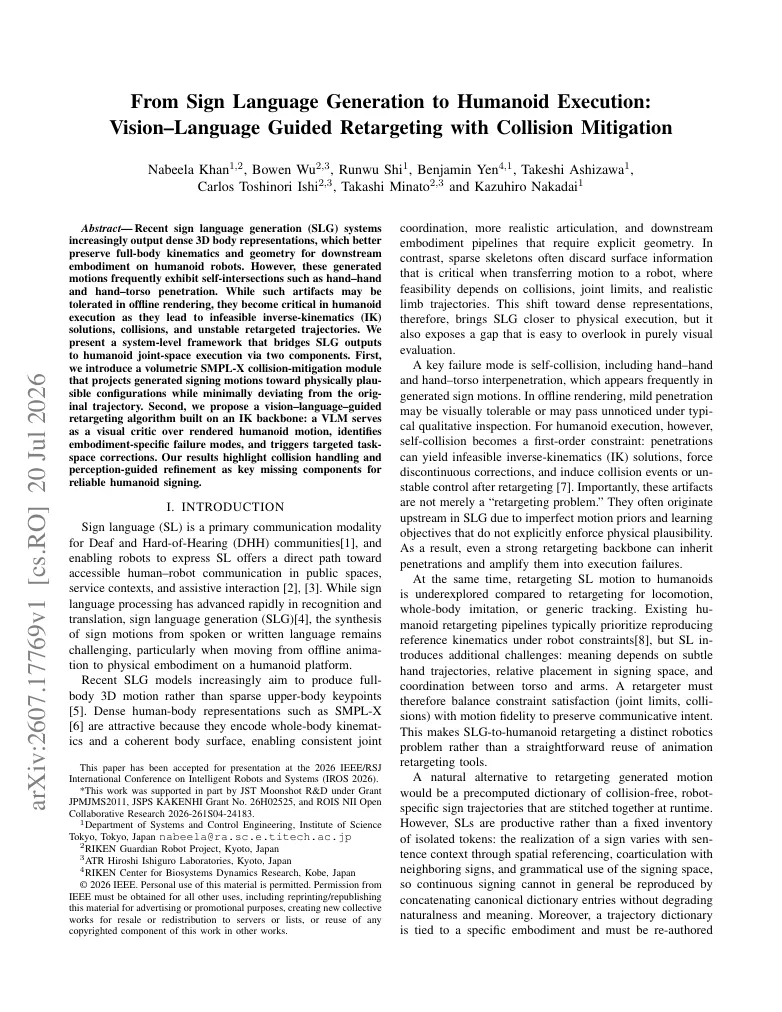
Turns generated sign-language body motion into humanoid joint motion by cleaning collisions and retargeting the poses.
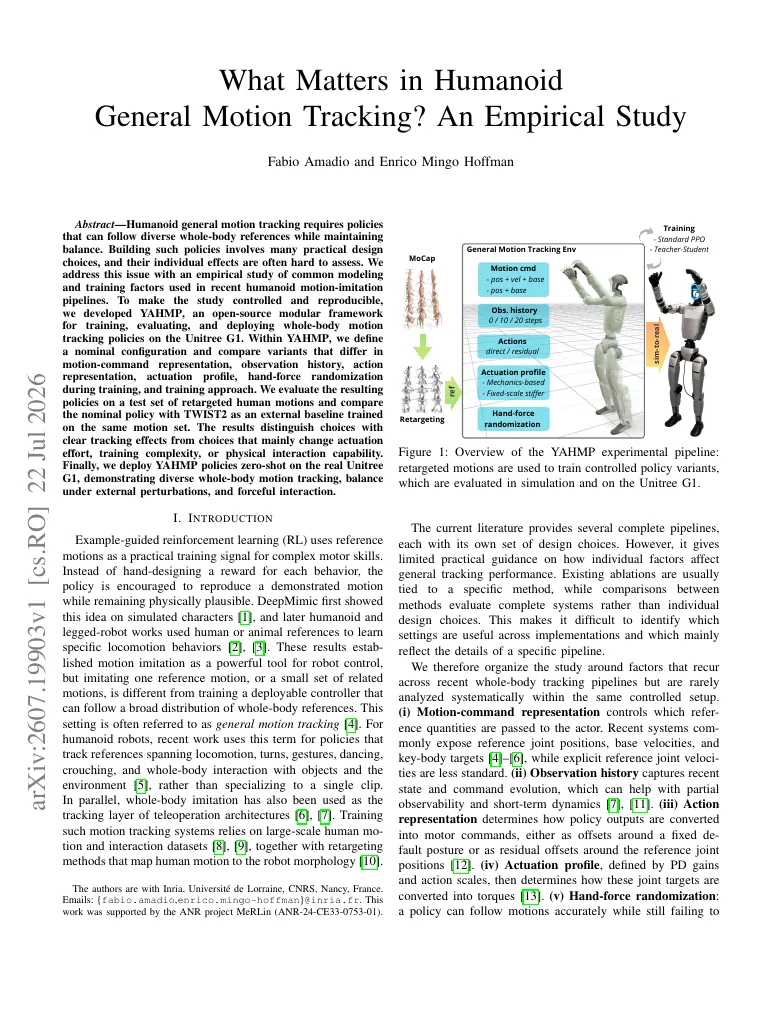
Tests which motion-tracking design choices matter most for making a Unitree G1 follow whole-body reference motions.
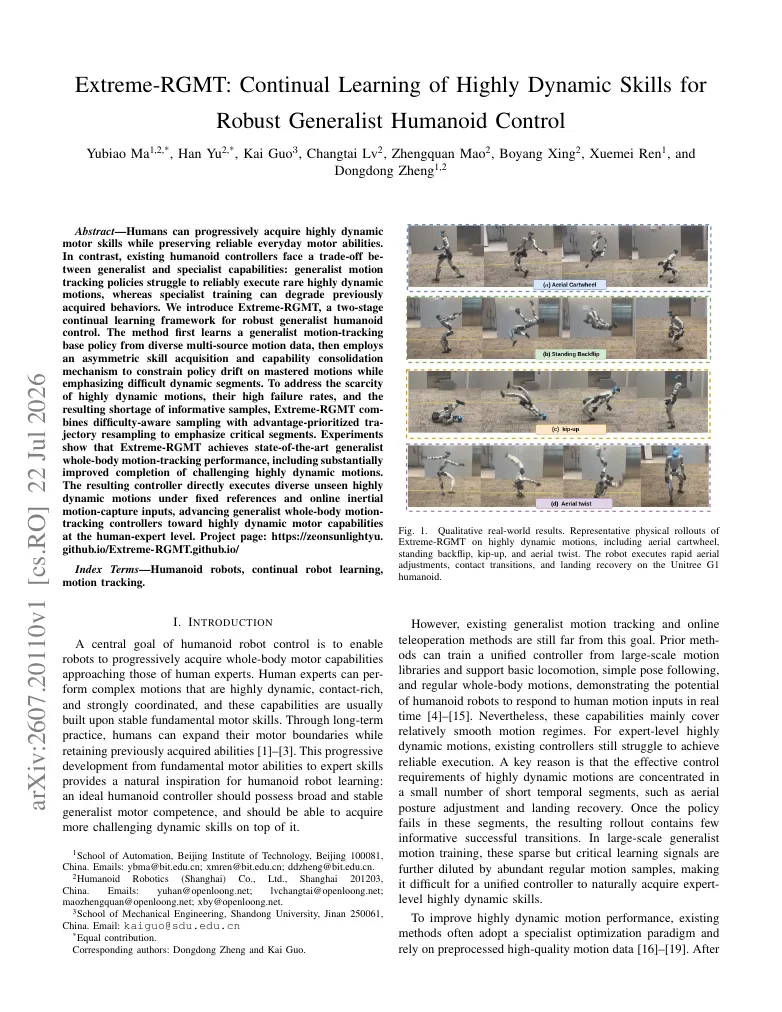
Helps humanoids learn dynamic skills like flips while keeping reliable everyday motion tracking.
Builds a humanoid behavior model that scales motion tracking across many references and robot deployment paths.
Whole-body task contact: feet, torso, hands, and objects.
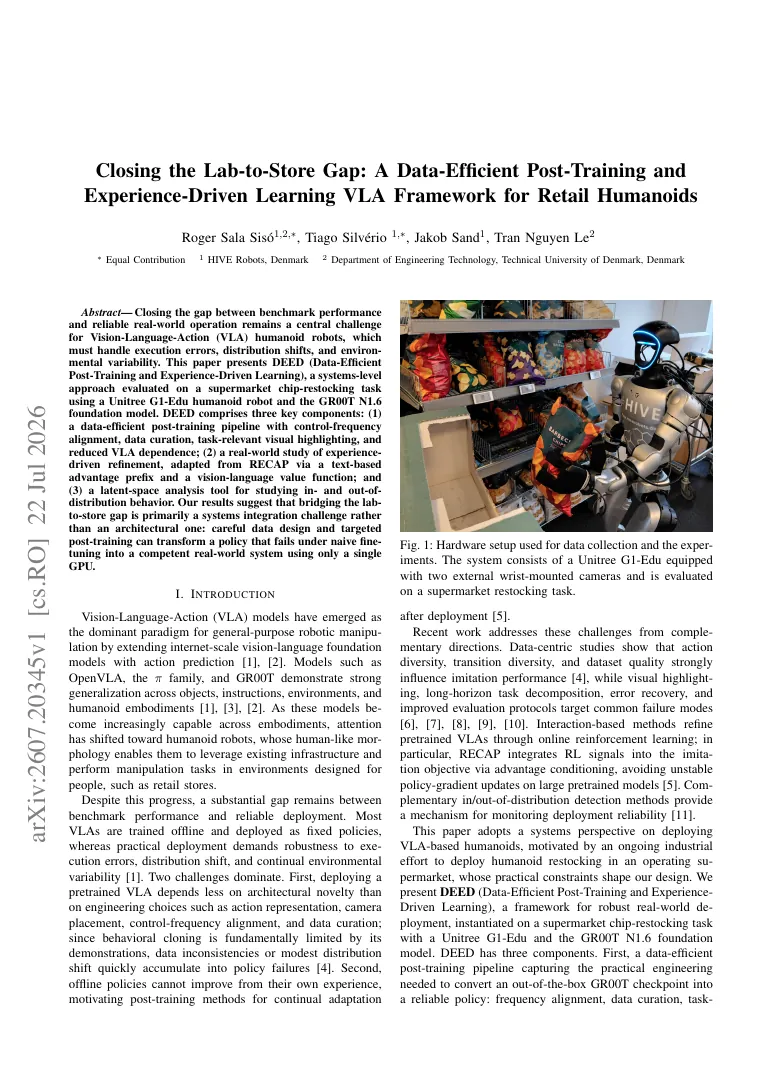
Improves a G1 retail humanoid by adding targeted post-training data from real task failures and experience.
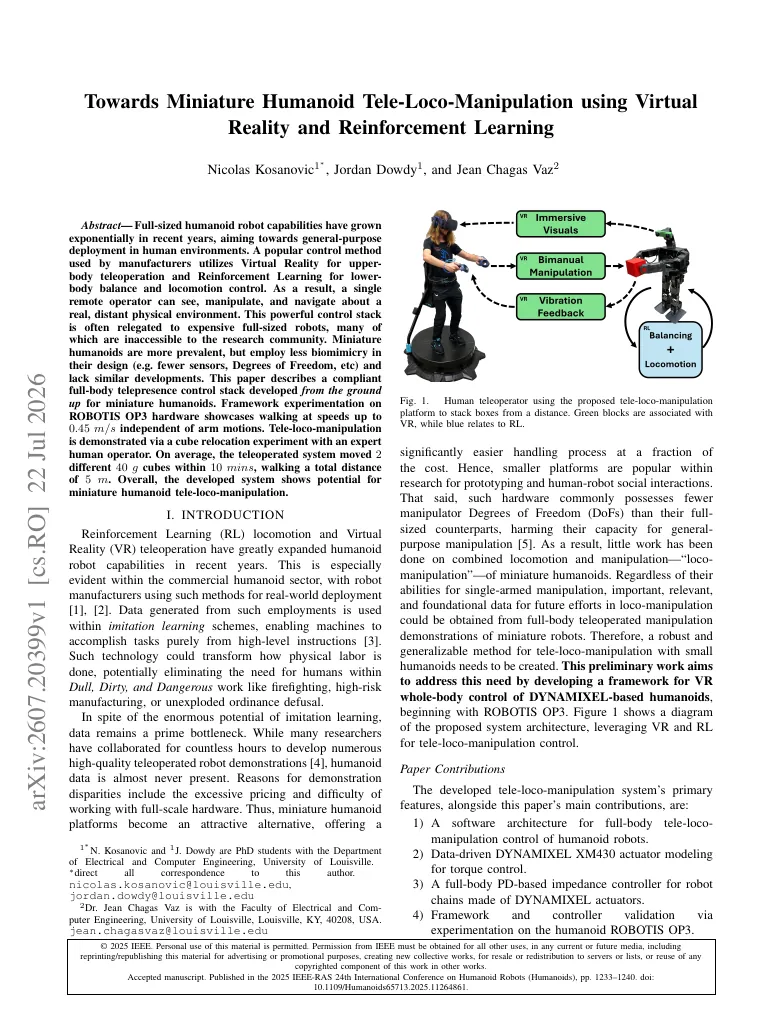
Lets a small ROBOTIS OP3 humanoid walk while a VR operator controls its arms to move objects.
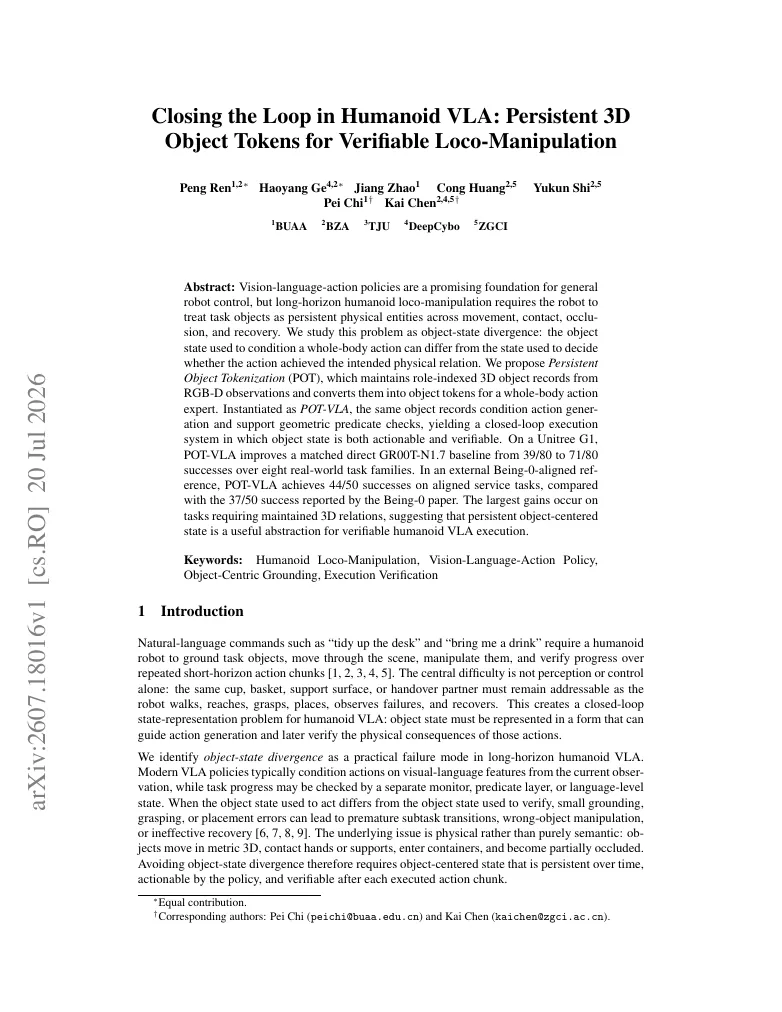
Gives a G1 humanoid persistent 3D object memory so it can act on objects and verify task progress.
MPC, impedance, safety layers, and whole-body coordination.
Filters humanoid contact plans before expensive optimization, then tracks the selected motion on real hardware.
Benchmarks, datasets, rewards, simulators, and tooling.
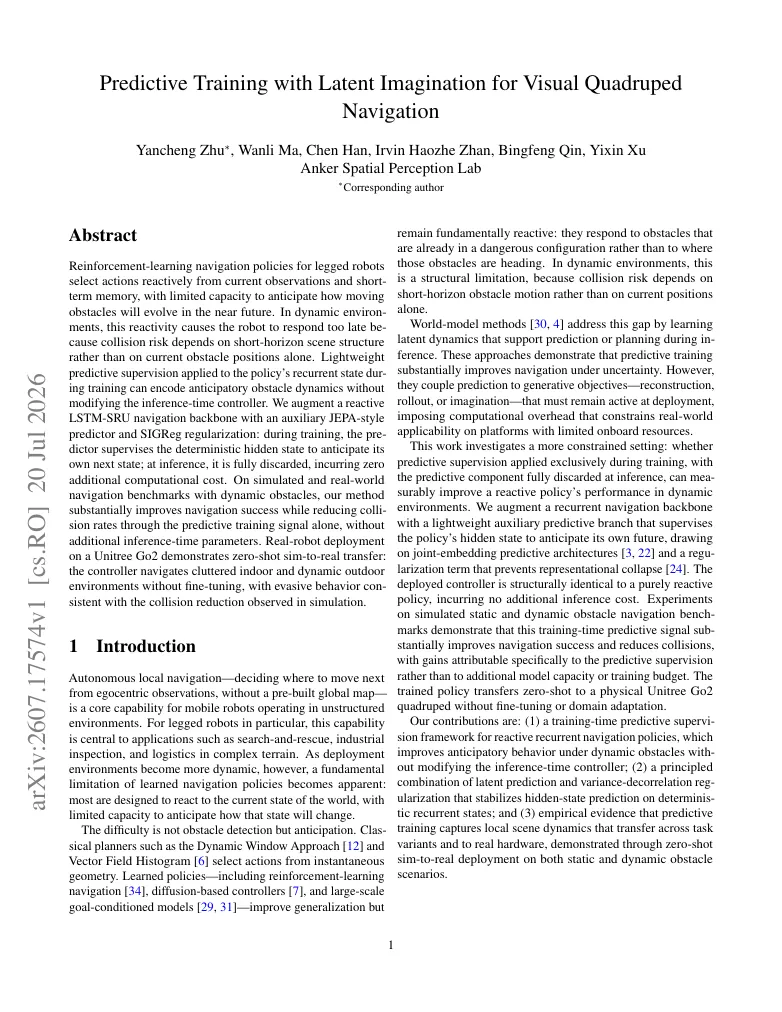
Trains quadrupeds to navigate moving obstacles by imagining short future states during training without slowing deployment.
Trains humanoid control skills without task rewards, then uses latent commands for robust movement and teleoperation.