paper preview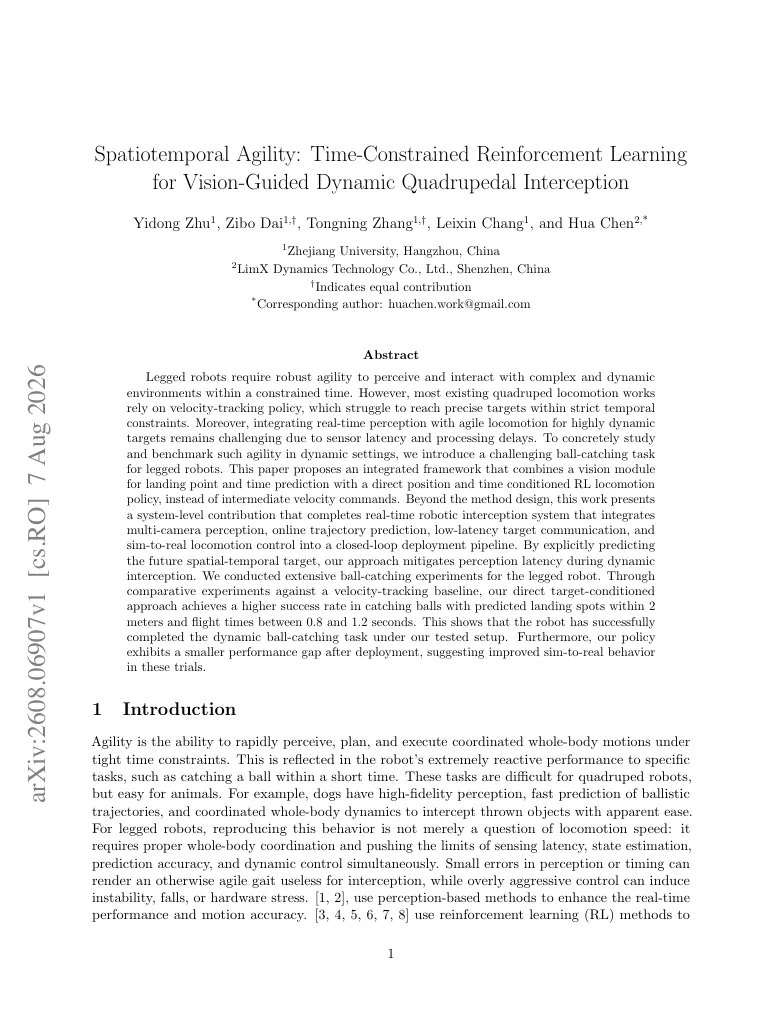
01arXiv
Spatiotemporal Agility: Time-Constrained Reinforcement Learning for Vision-Guided Dynamic Quadrupedal Interception
Teaches a Go2 to chase and intercept moving objects by predicting where and when they will land.
Terrain, gait, robustness, and agile movement.
Teaches a Go2 to chase and intercept moving objects by predicting where and when they will land.
Keeps a large quadruped walking after actuator failures by changing gait timing from body-sensor history.
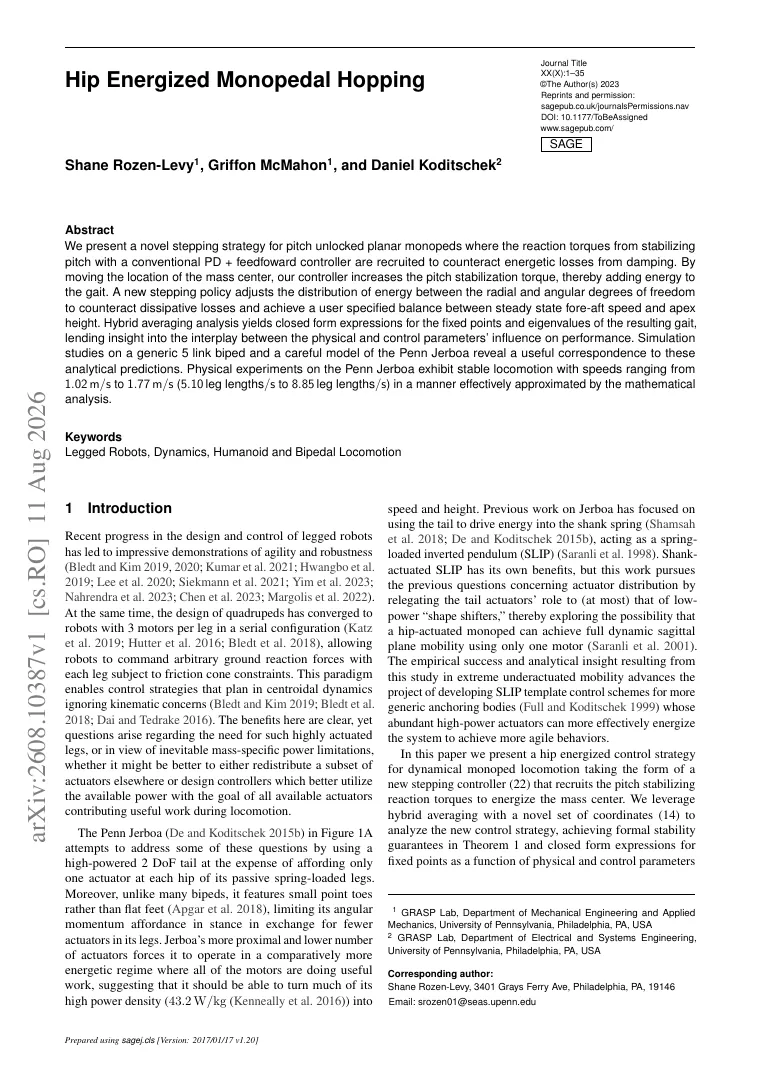
Makes a one-legged robot hop faster by reusing hip torque to add energy while staying balanced.
Whole-body task contact: feet, torso, hands, and objects.
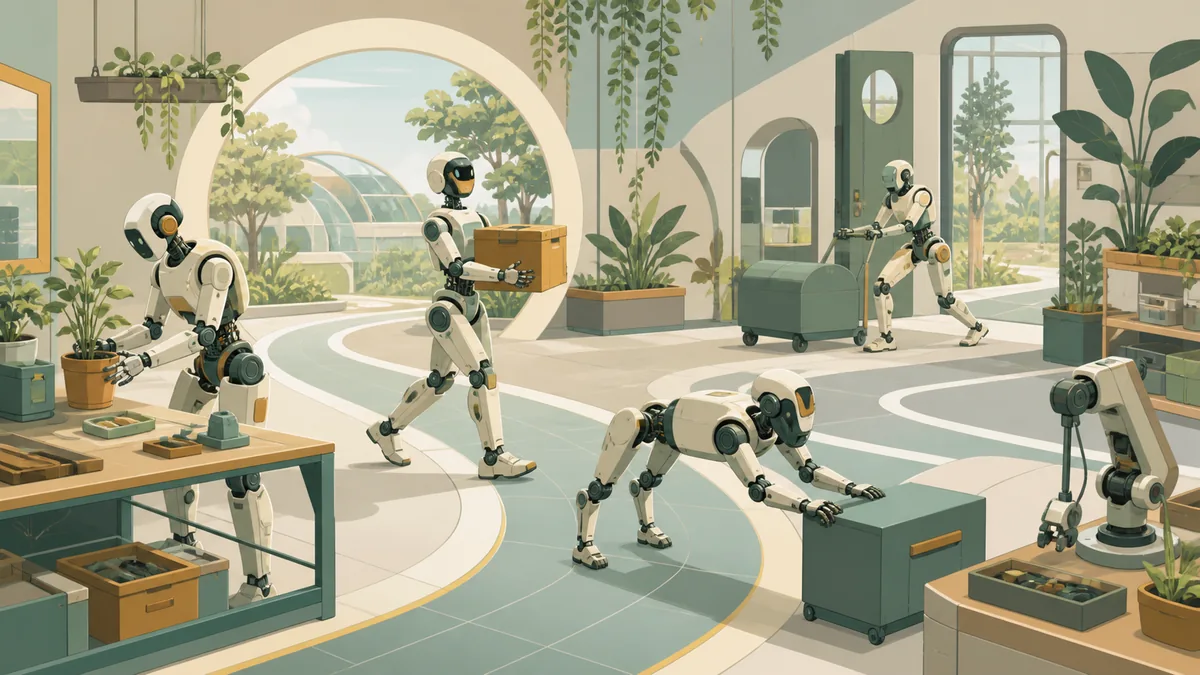
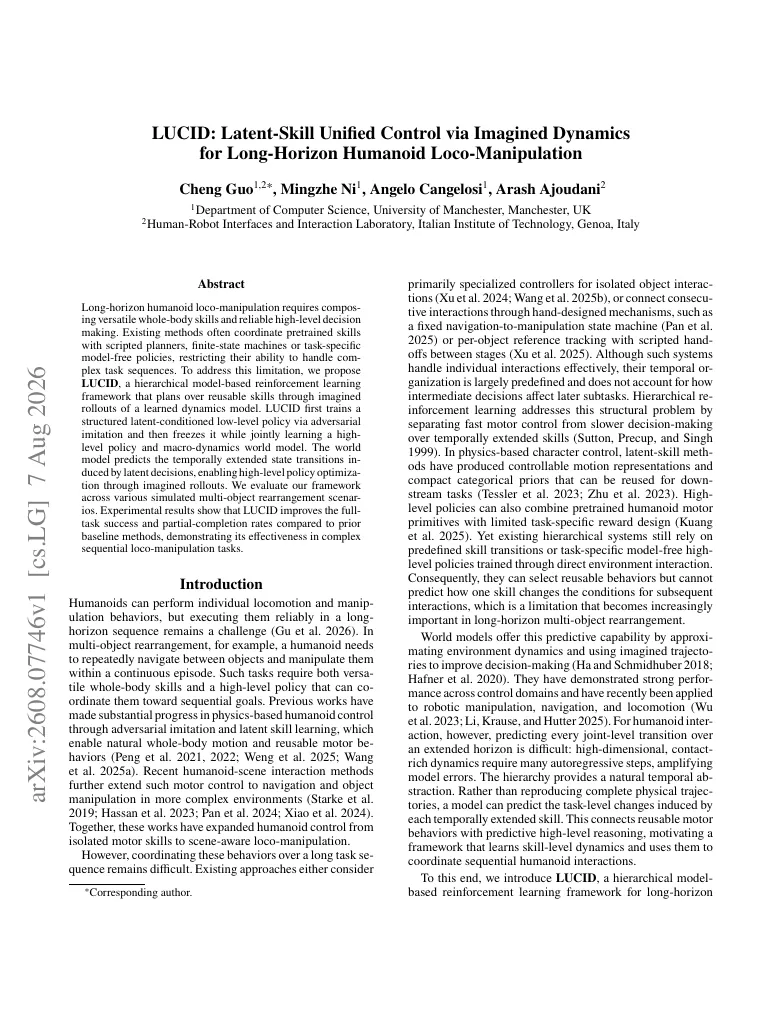
Combines reusable humanoid skills with imagined future dynamics so a humanoid can finish long object-interaction tasks.
Turns MPC demonstrations into sparse-reward policies for moving and manipulating on Spot and G1.
MPC, impedance, safety layers, and whole-body coordination.
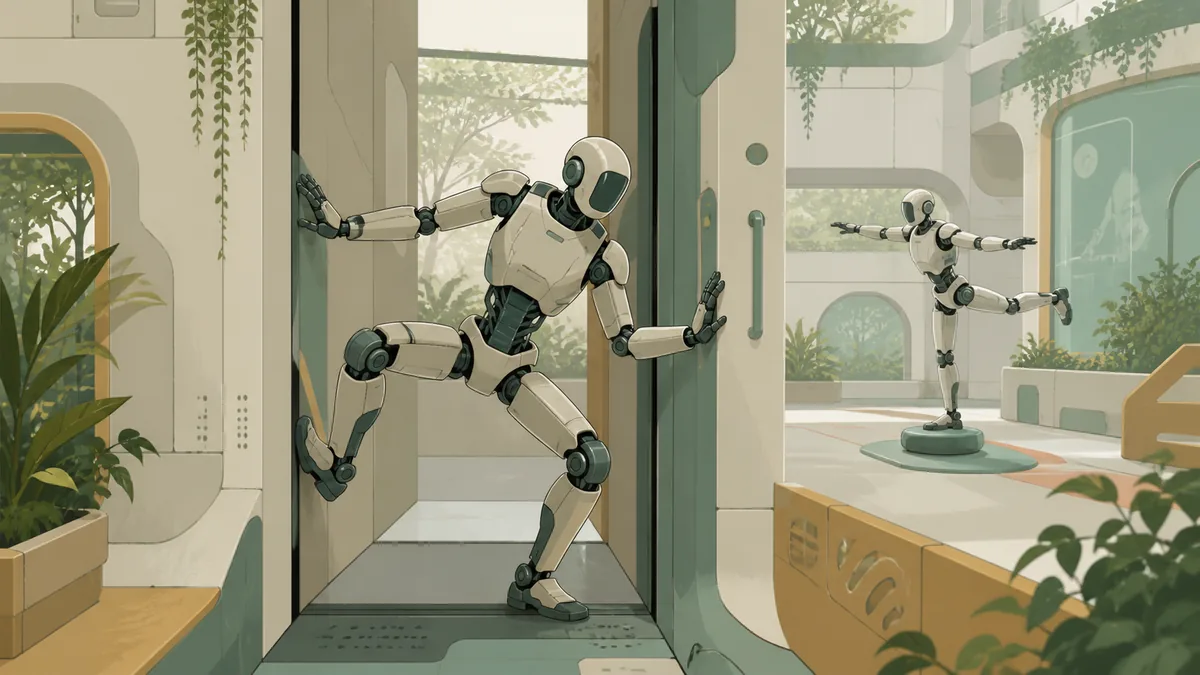
Plans G1 whole-body paths through tight spaces by shaping poses that avoid self-collisions and support contacts.
Benchmarks, datasets, rewards, simulators, and tooling.
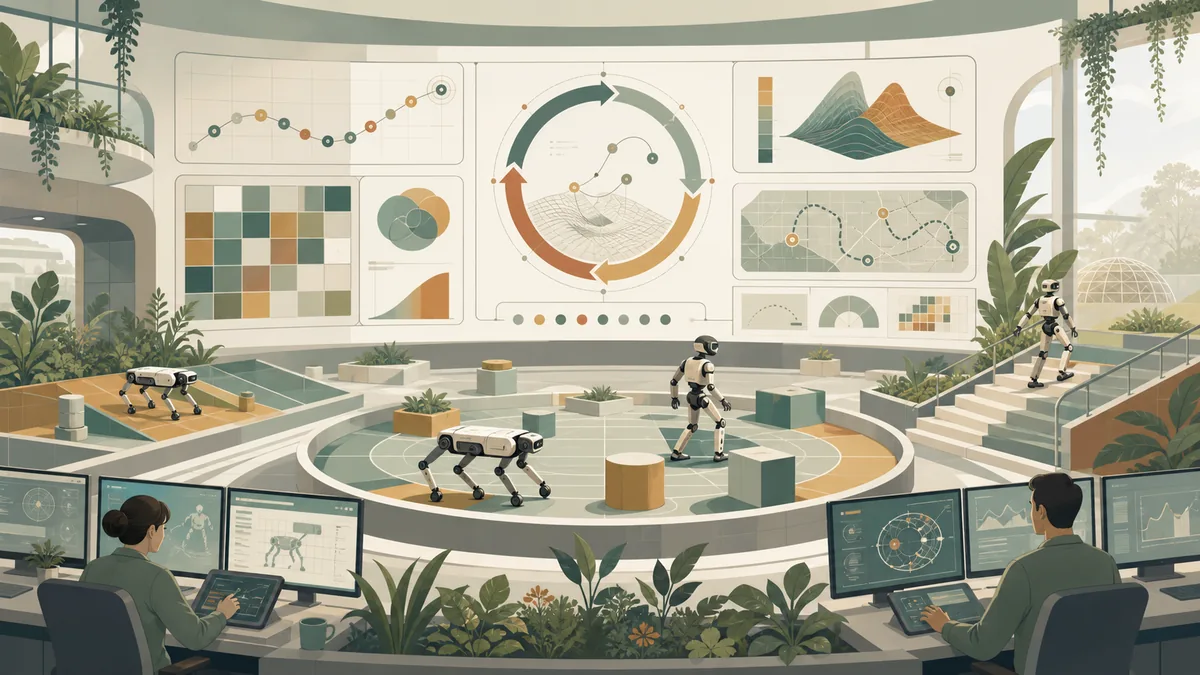
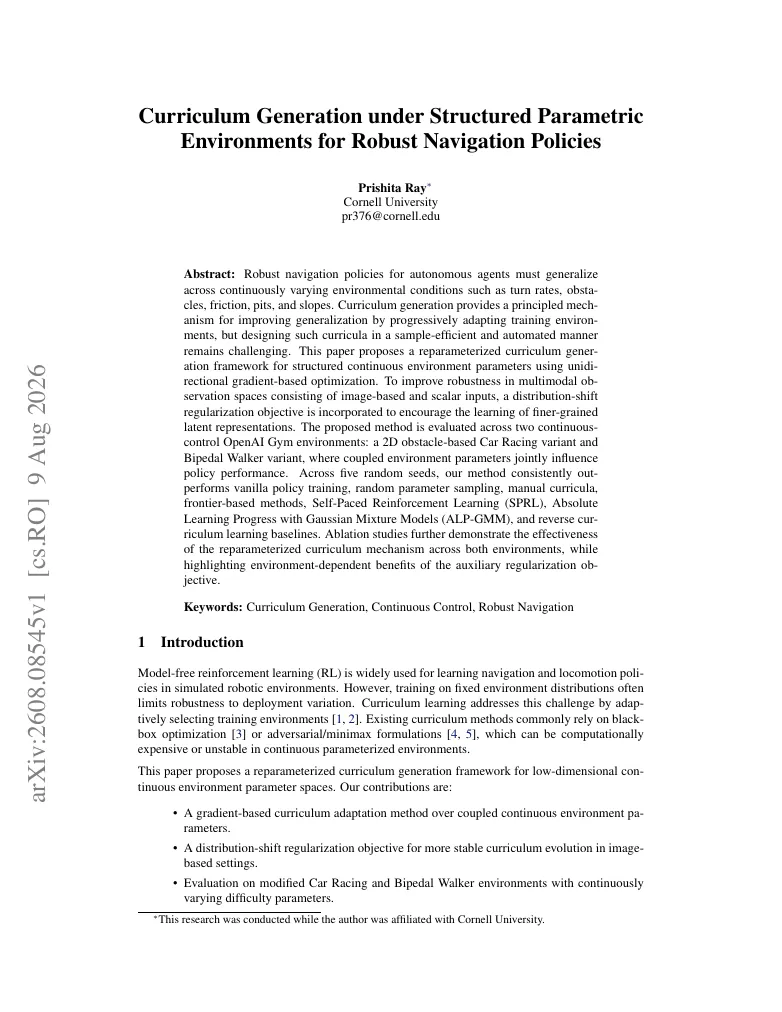
Makes robot navigation training harder at the right pace so walking and driving policies become more robust.
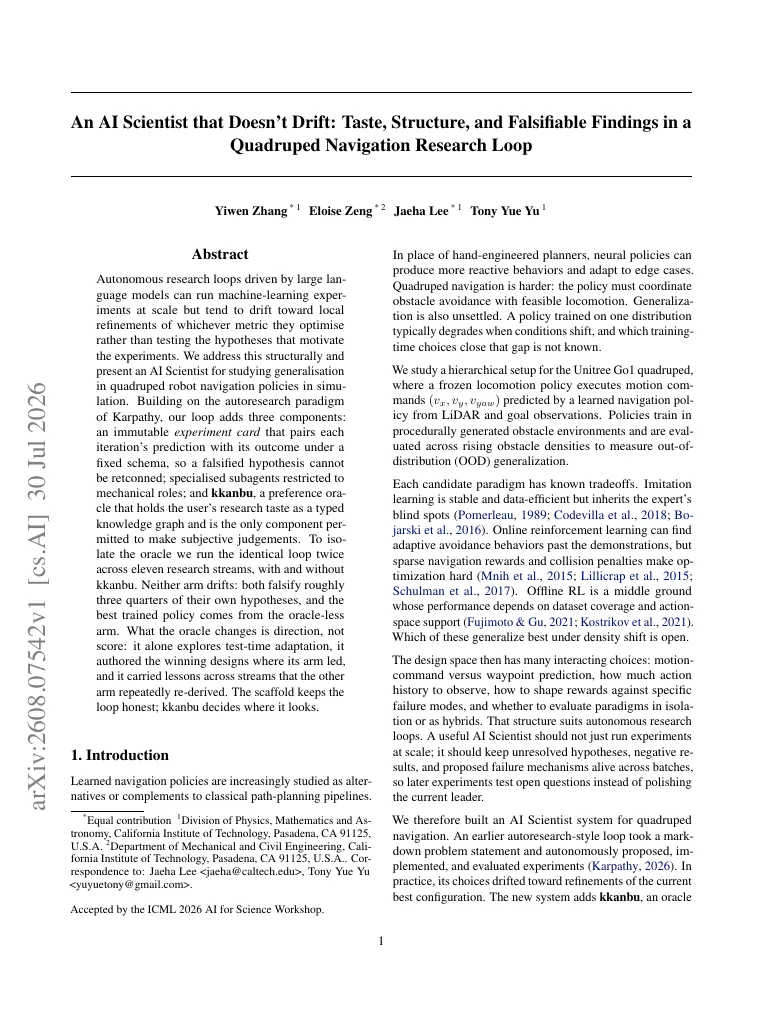
Runs a structured research loop that designs and tests quadruped navigation experiments without drifting from falsifiable claims.