paper preview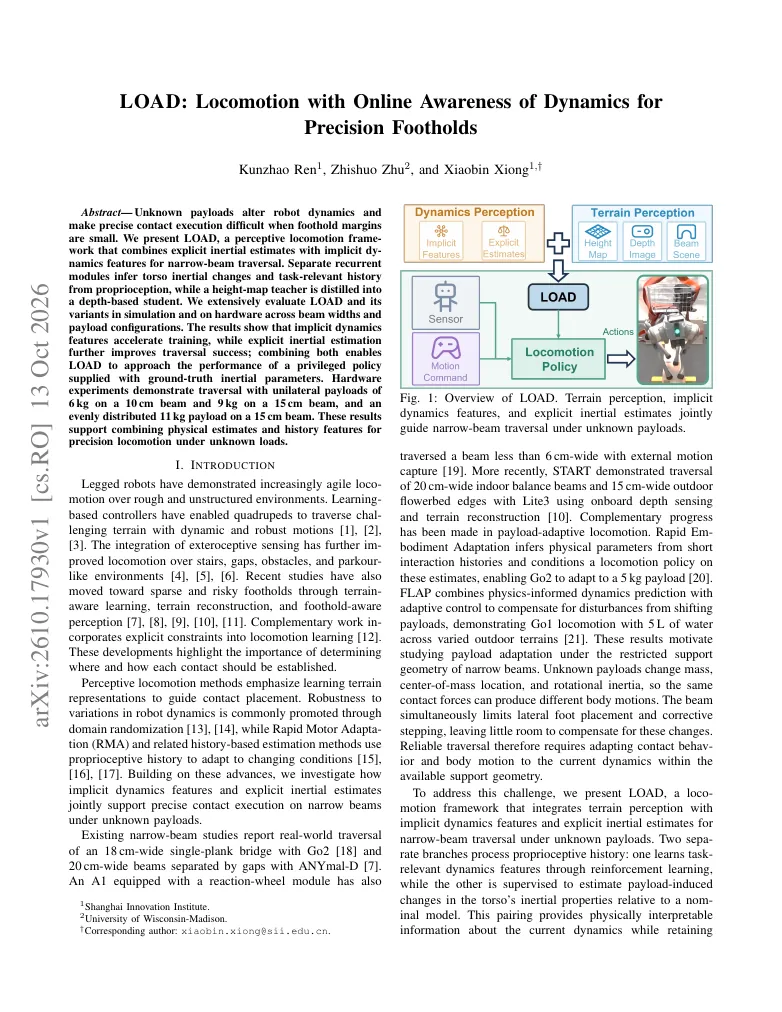
01arXiv
Locomotion with Online Awareness of Dynamics for Precision Footholds
Helps quadrupeds place their feet precisely by estimating how payloads change their dynamics online.
Terrain, gait, robustness, and agile movement.
Helps quadrupeds place their feet precisely by estimating how payloads change their dynamics online.
Gives one humanoid controller a library of behaviors that adapt to terrain and steering commands.
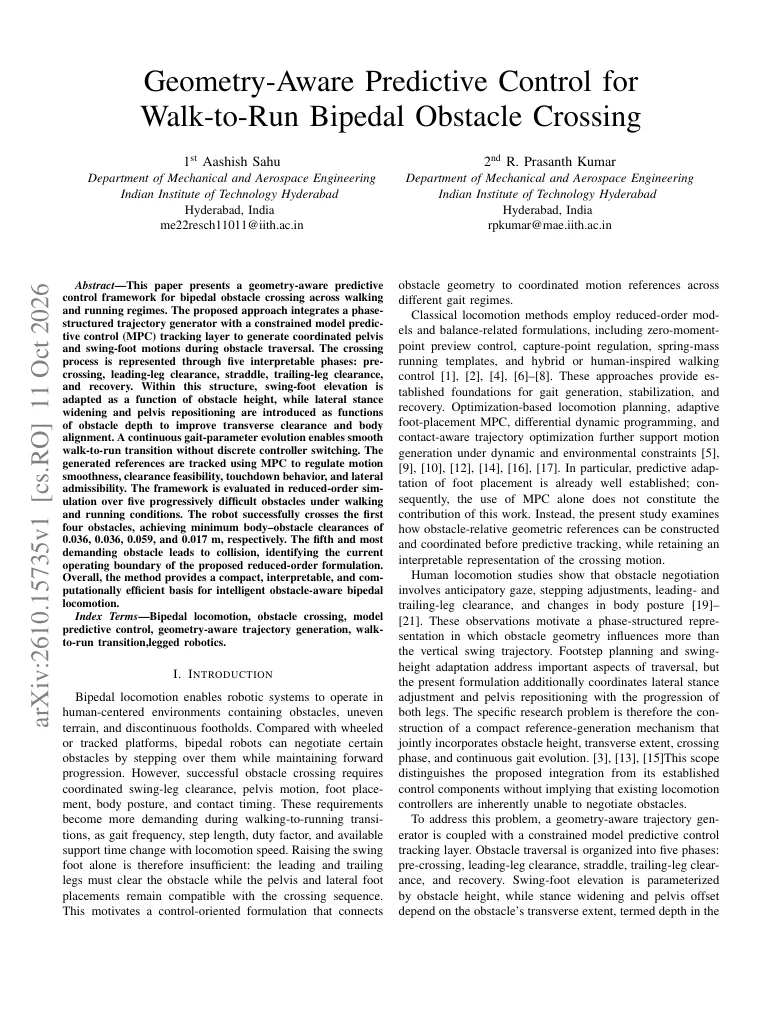
Plans a biped's transition from walking to running so it can clear obstacles without losing balance.
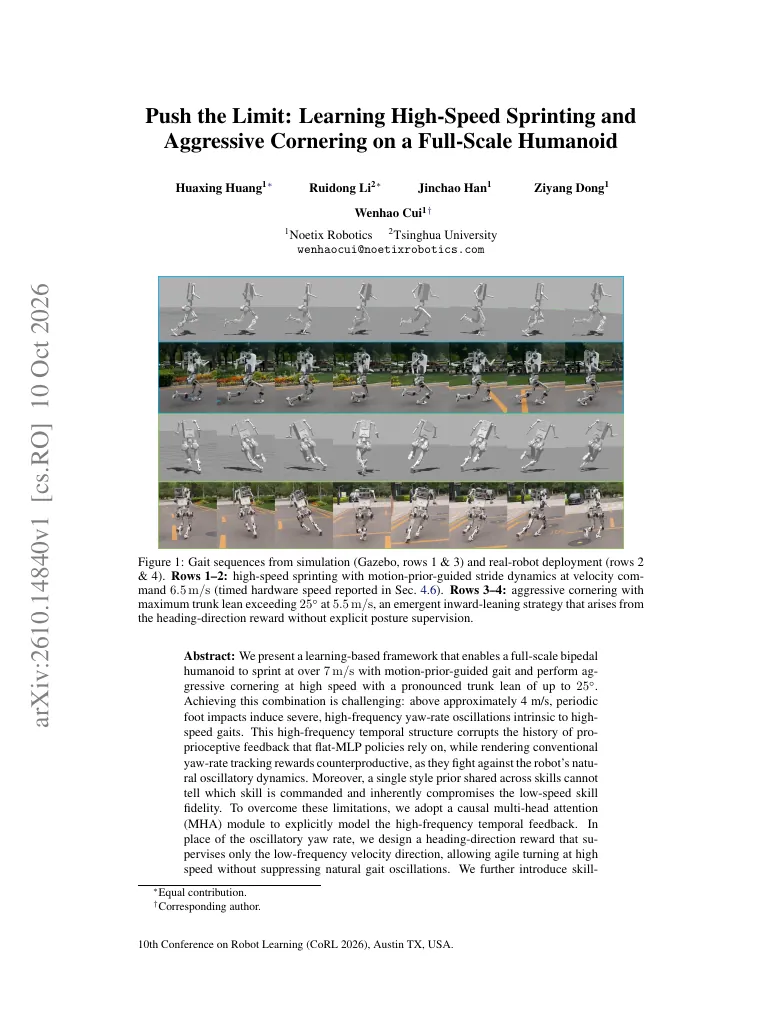
Teaches a full-size humanoid to sprint quickly and corner aggressively without falling.
Routes a humanoid among specialized walking experts to cross varied terrain without motion demonstrations.
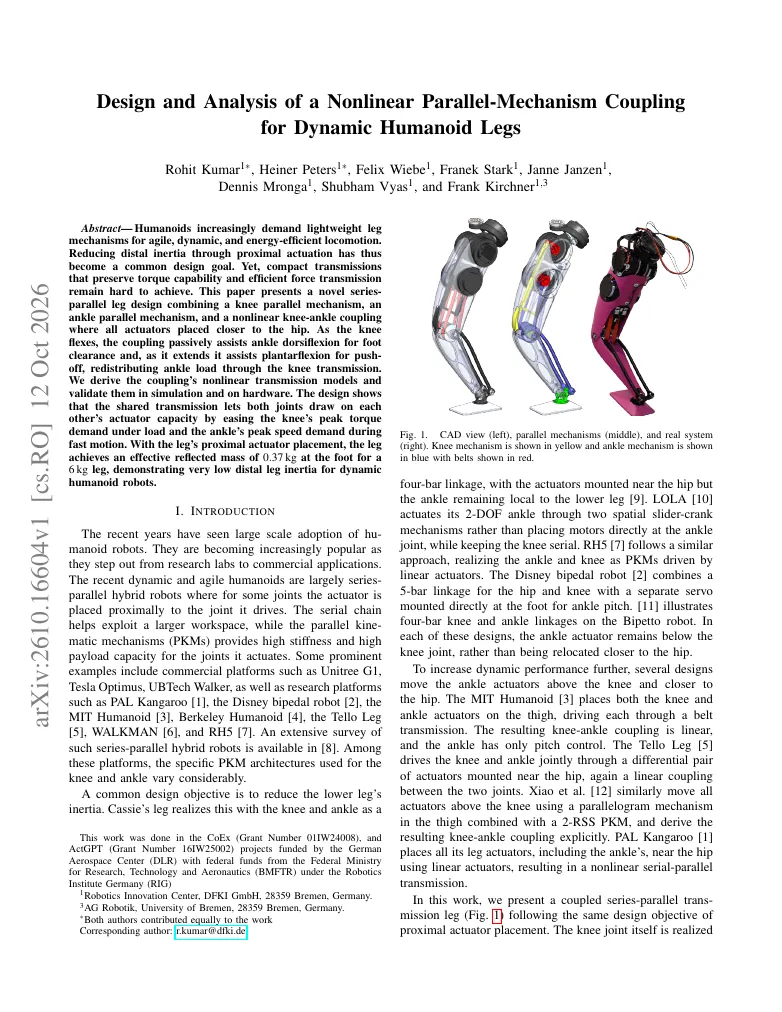
Shares actuator effort across a humanoid leg mechanism to improve squatting and dynamic motion.
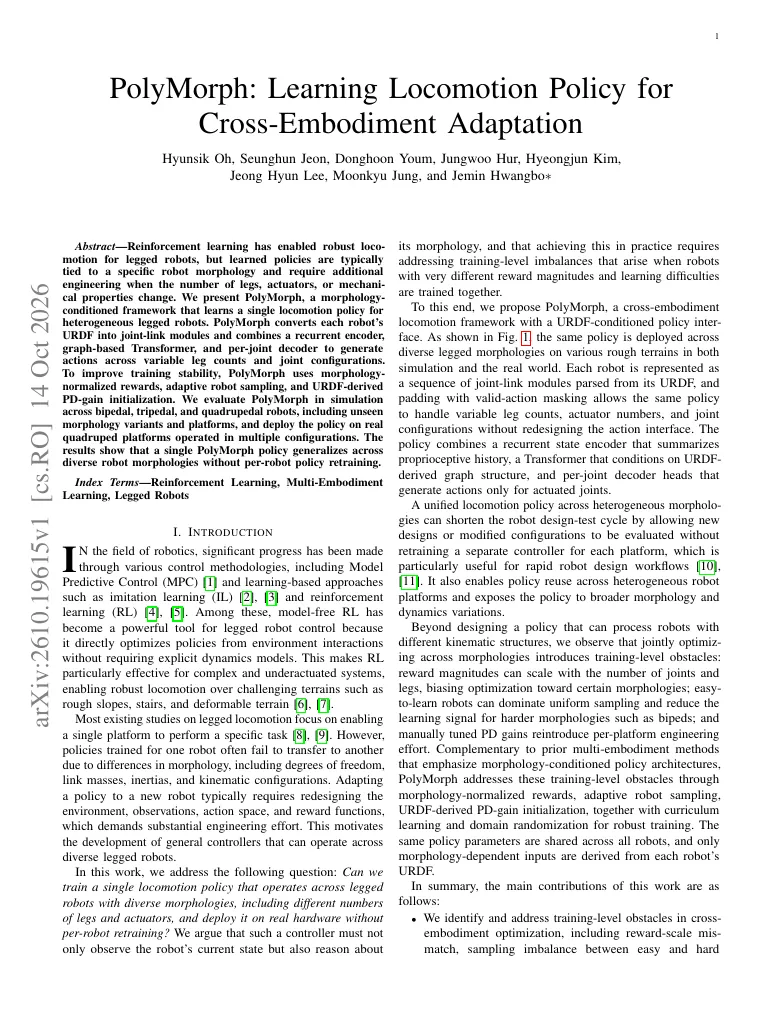
Trains one locomotion policy that adapts across bipeds, tripeds, and quadrupeds.
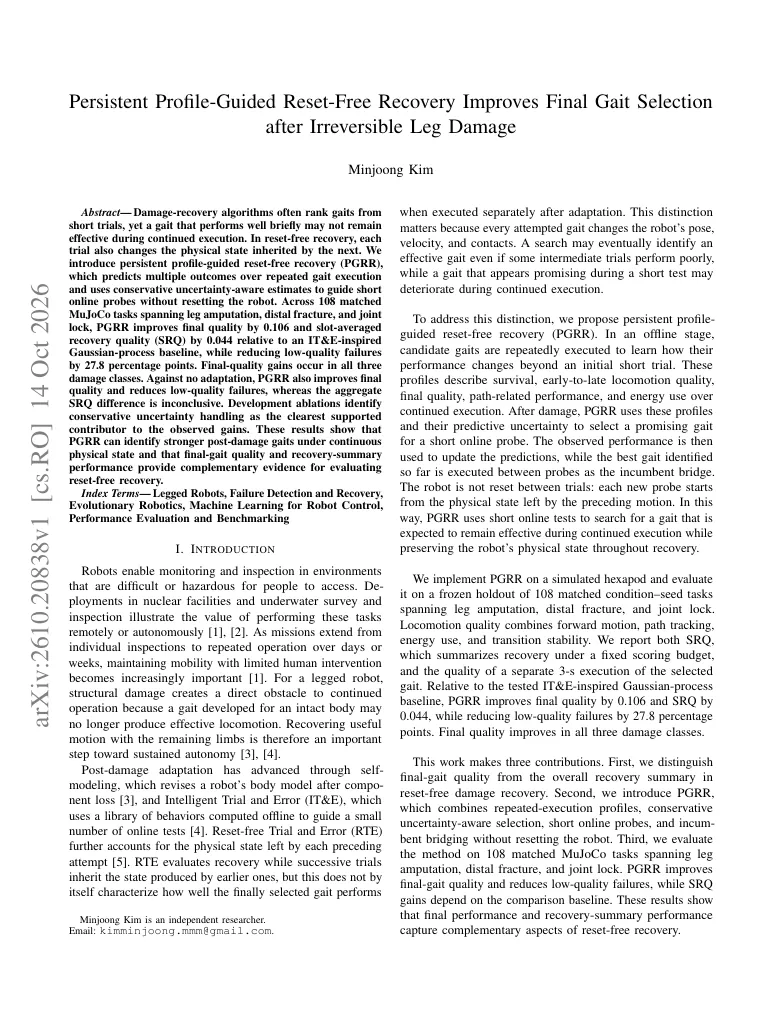
Helps a damaged legged robot choose a stable new gait without repeated resets.
Reference motion, imitation, retargeting, and behavior priors.
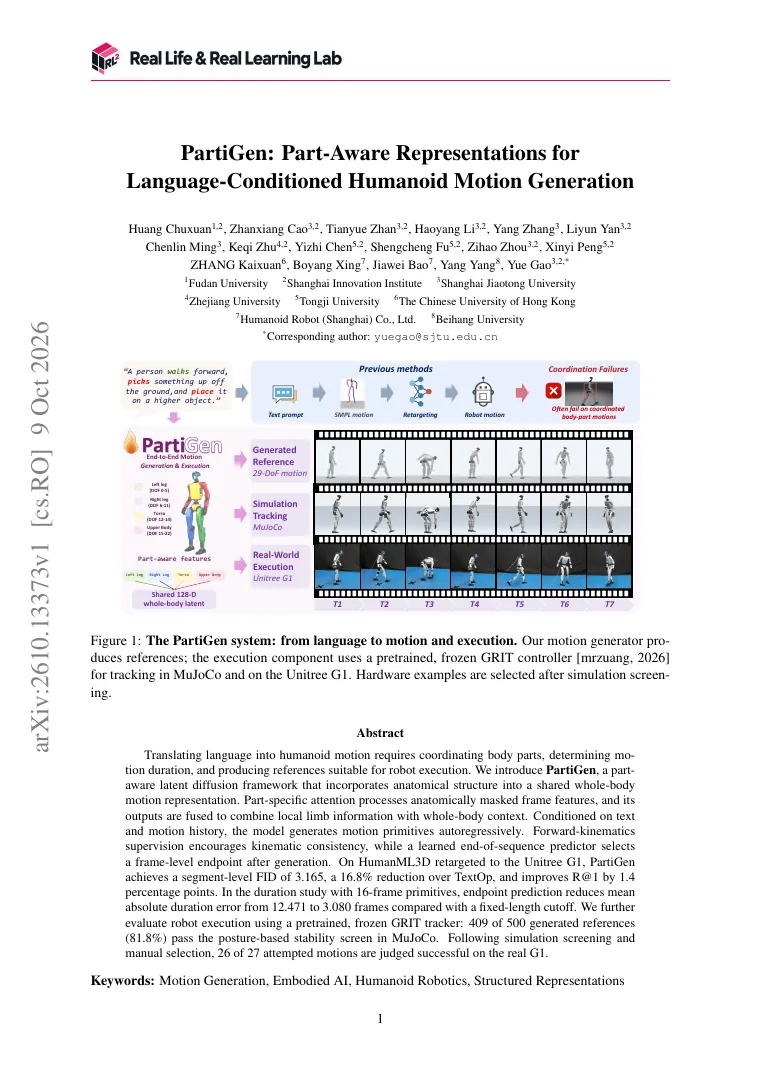
Generates whole-body G1 motions from language while keeping each body part coordinated.
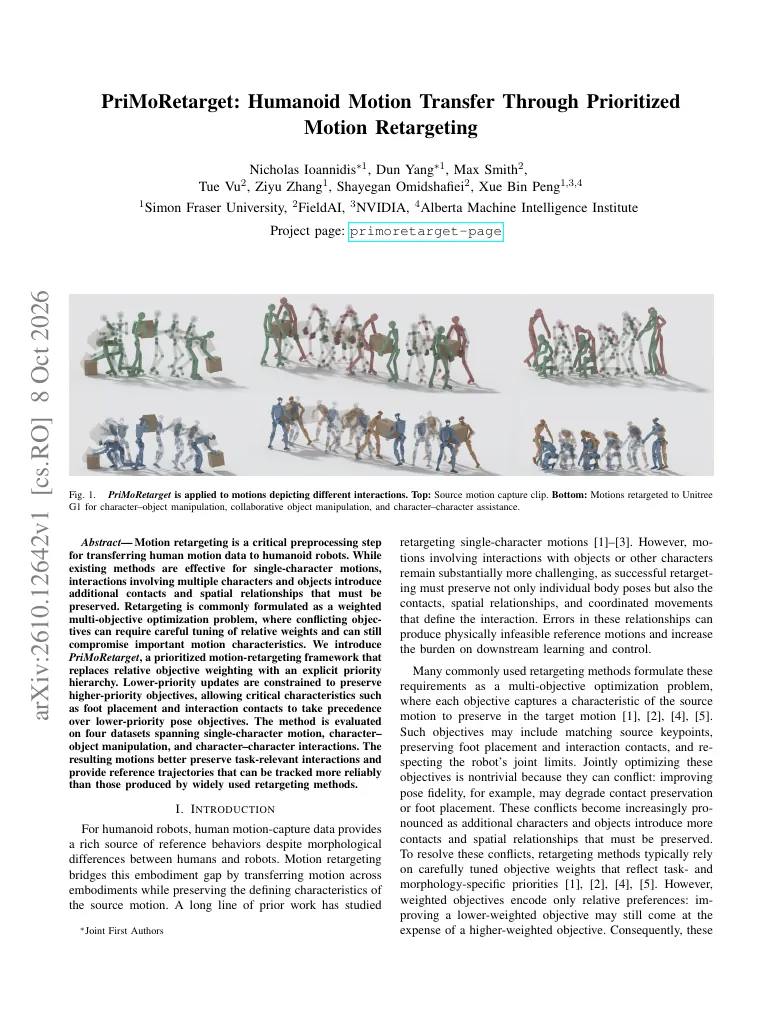
Retargets human motions to humanoids while preserving foot contacts and interaction constraints.
Generates humanoid motions that react continuously to the direction and timing of sounds.
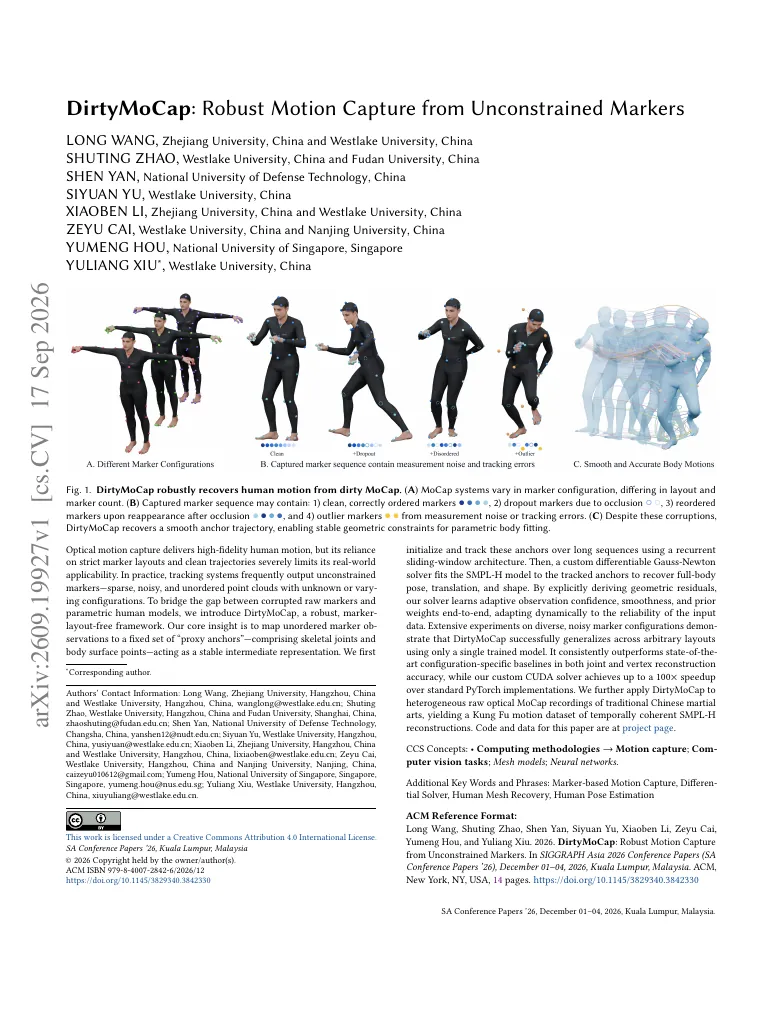
Recovers human motion from loose, noisy optical markers so it can become reusable robot-reference data.
Generates people interacting with objects from text while maintaining body-object contact.
Captures vision, body motion, hand pose, and touch together for humanoid loco-manipulation demonstrations.
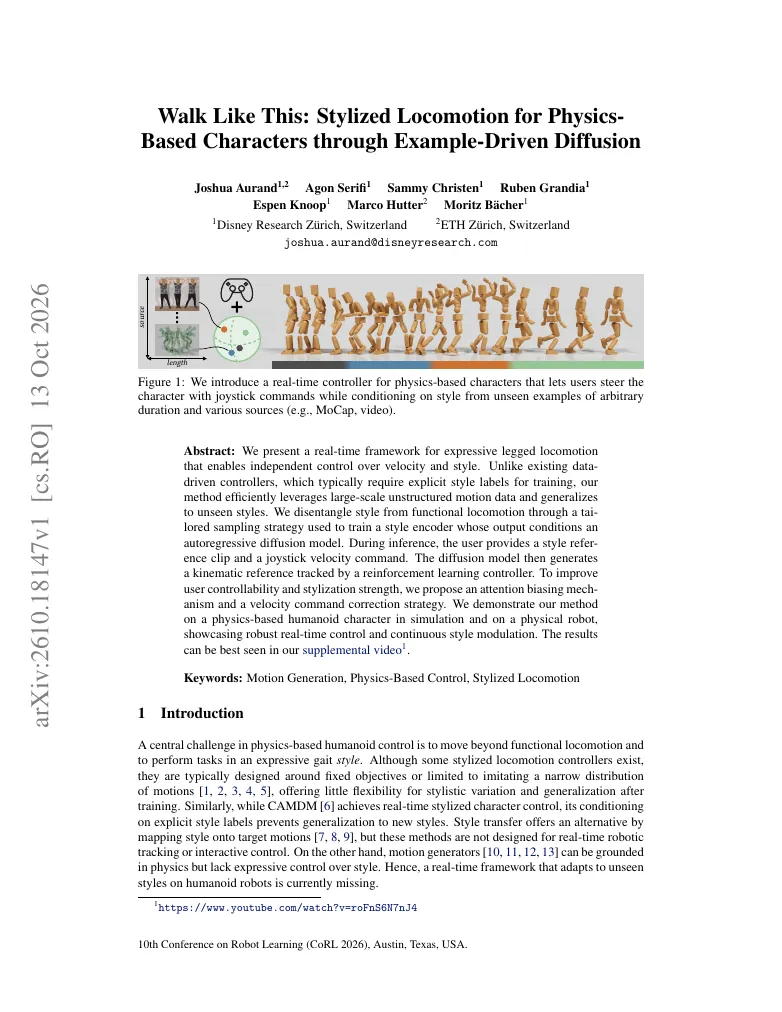
Generates stylized G1 walking and turning from a few example motions.
Transfers a trained whole-body controller from Unitree G1 to H2 with a small amount of adaptation.
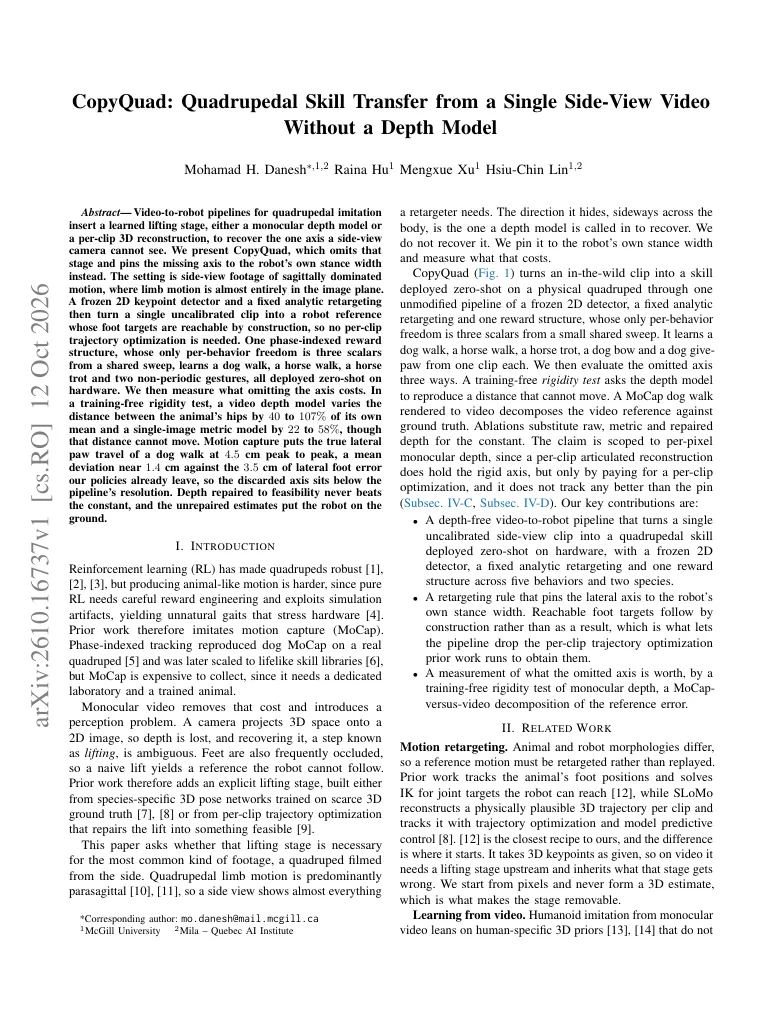
Learns quadruped tricks from a single side-view video without estimating full 3D motion.
Chooses human reaction motions that remain physically feasible after retargeting to a humanoid.
Generates editable humanoid and object motion references from video for G1 whole-body tracking.
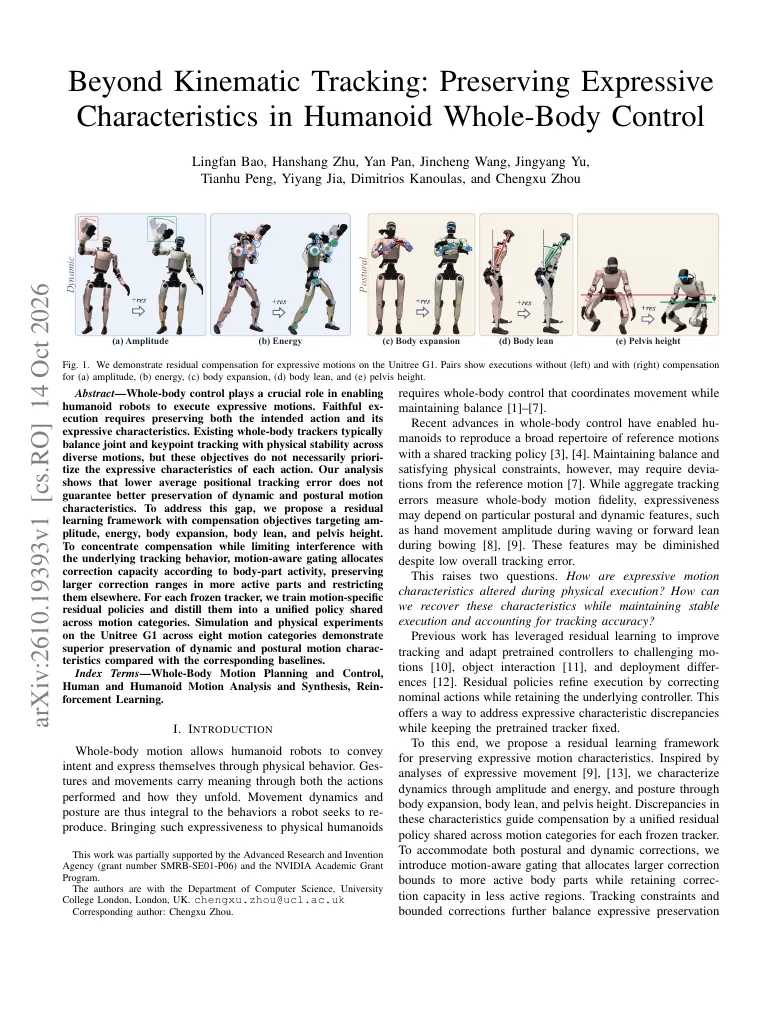
Restores the energy, posture, and style that standard humanoid motion trackers often lose.
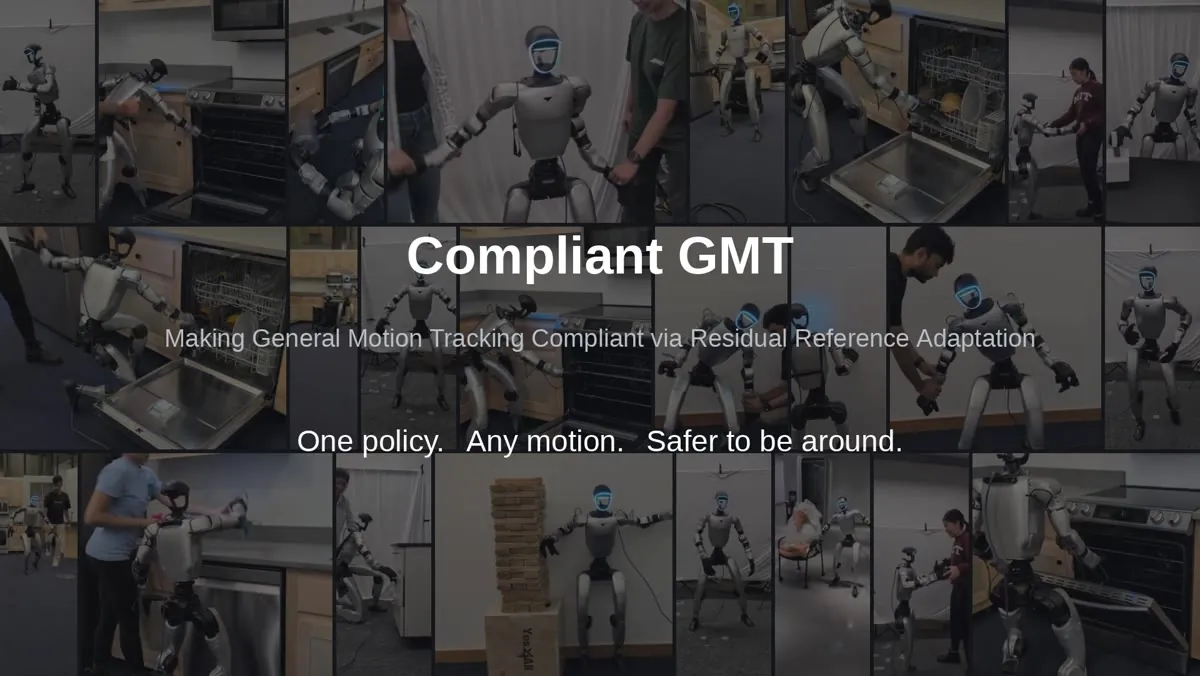
Makes a general humanoid motion tracker compliant by adapting references during physical contact.
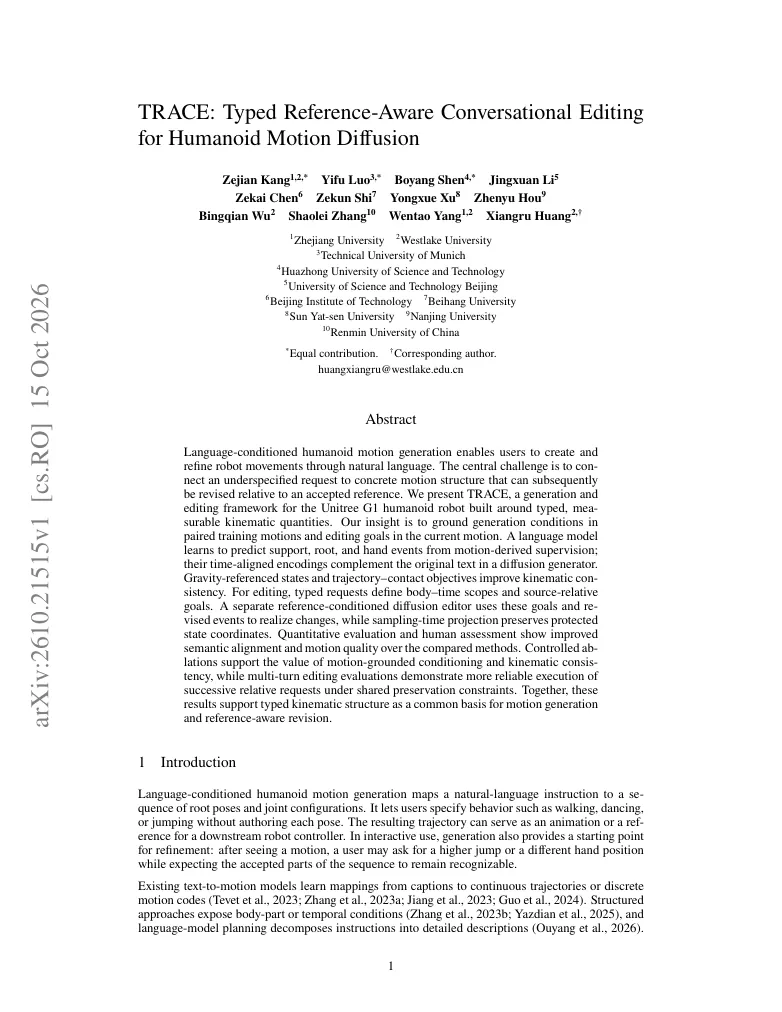
Edits generated humanoid motions with natural language while preserving protected body constraints.
Whole-body task contact: feet, torso, hands, and objects.
Teaches humanoids to play reactive tennis by combining walking skills with video-learned swings.
Replans a humanoid's cart-pushing motion when the cart's mass or caster behavior changes.
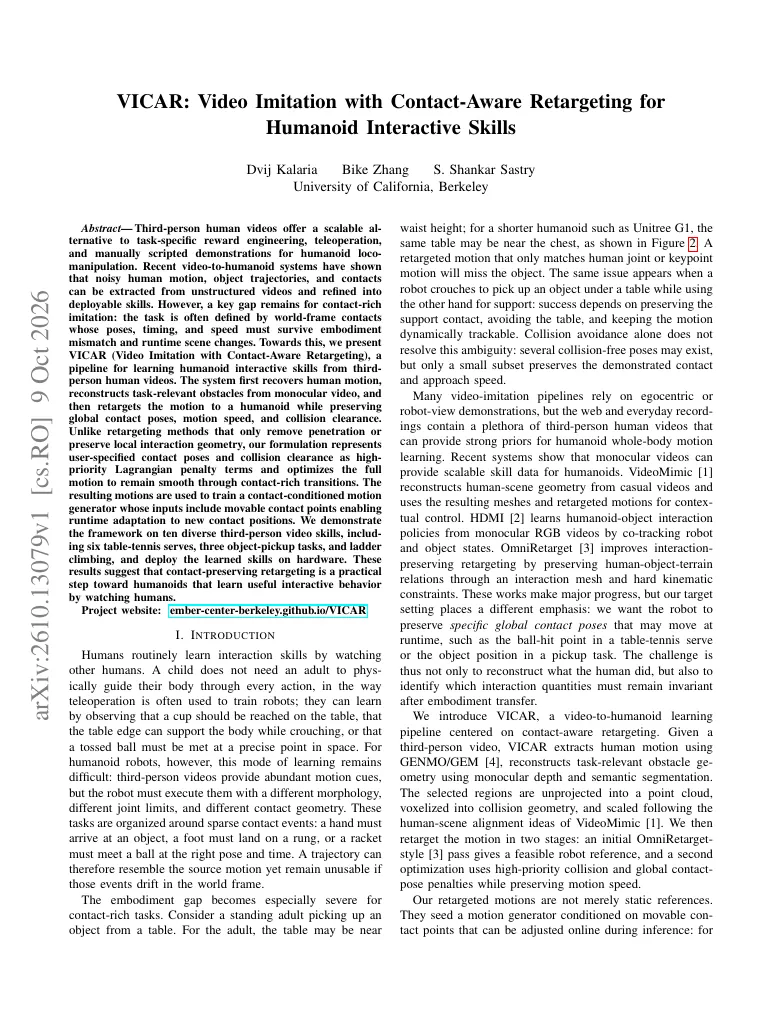
Turns ordinary videos into contact-aware humanoid skills such as climbing a ladder or opening objects.
Teaches a humanoid to step, brace, and carry with its whole body through a wearable contact interface.
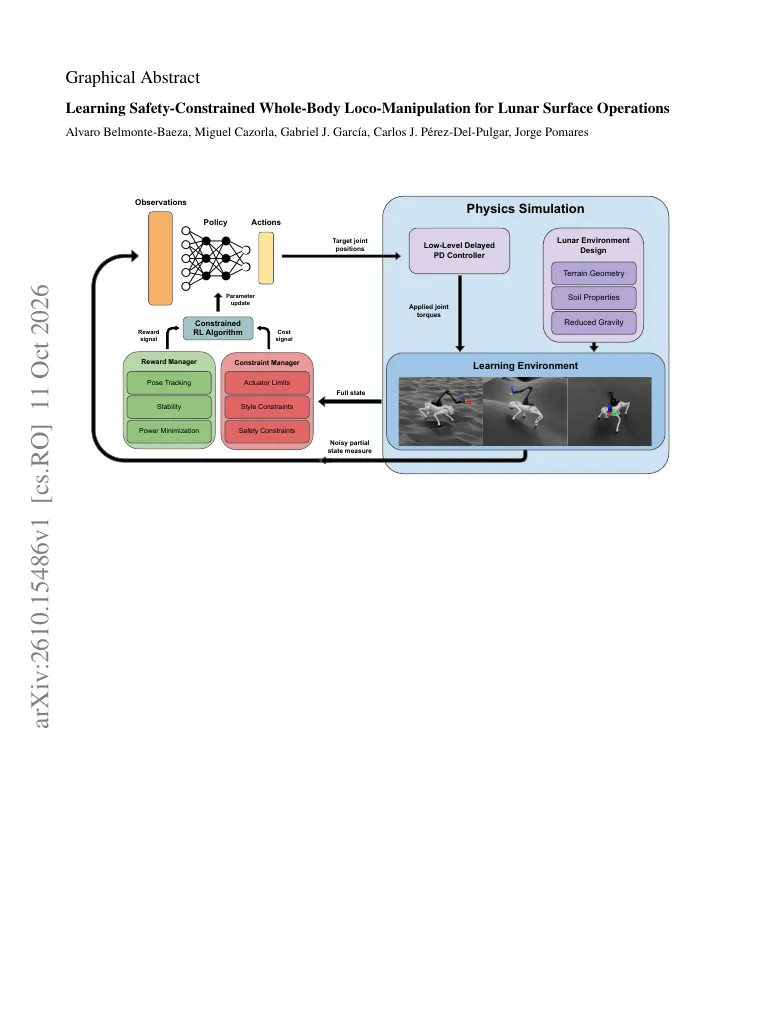
Teaches a humanoid to move its legs and arms safely while working in low-gravity lunar conditions.
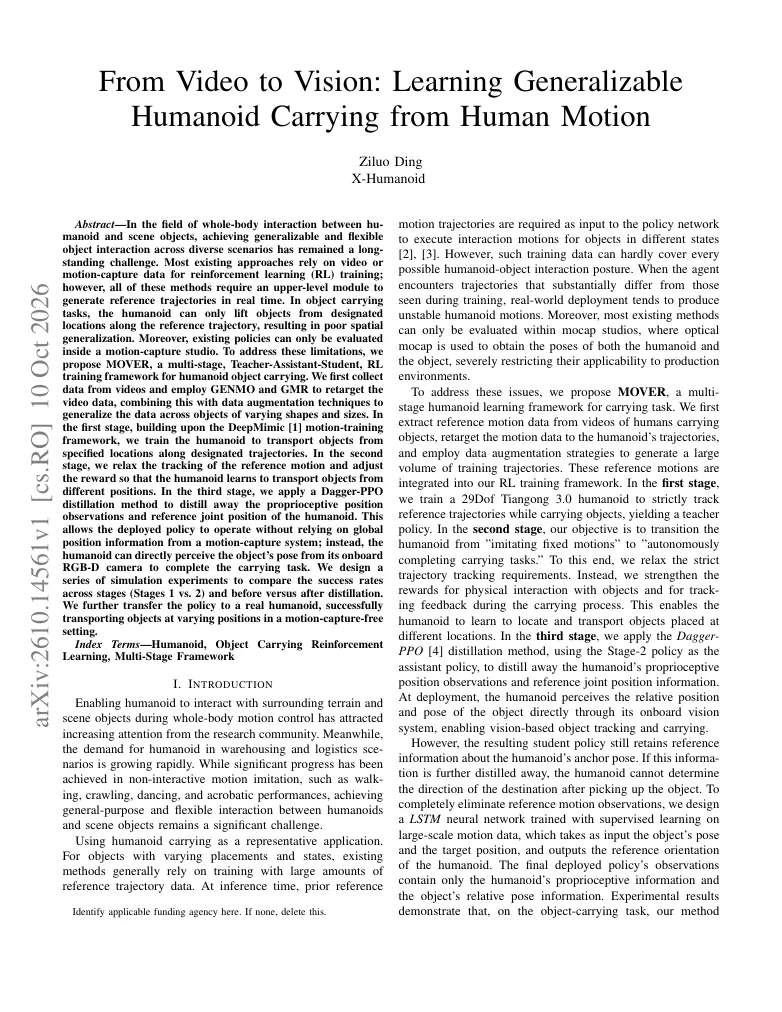
Teaches humanoids to carry objects from human video while adapting to new views and loads.
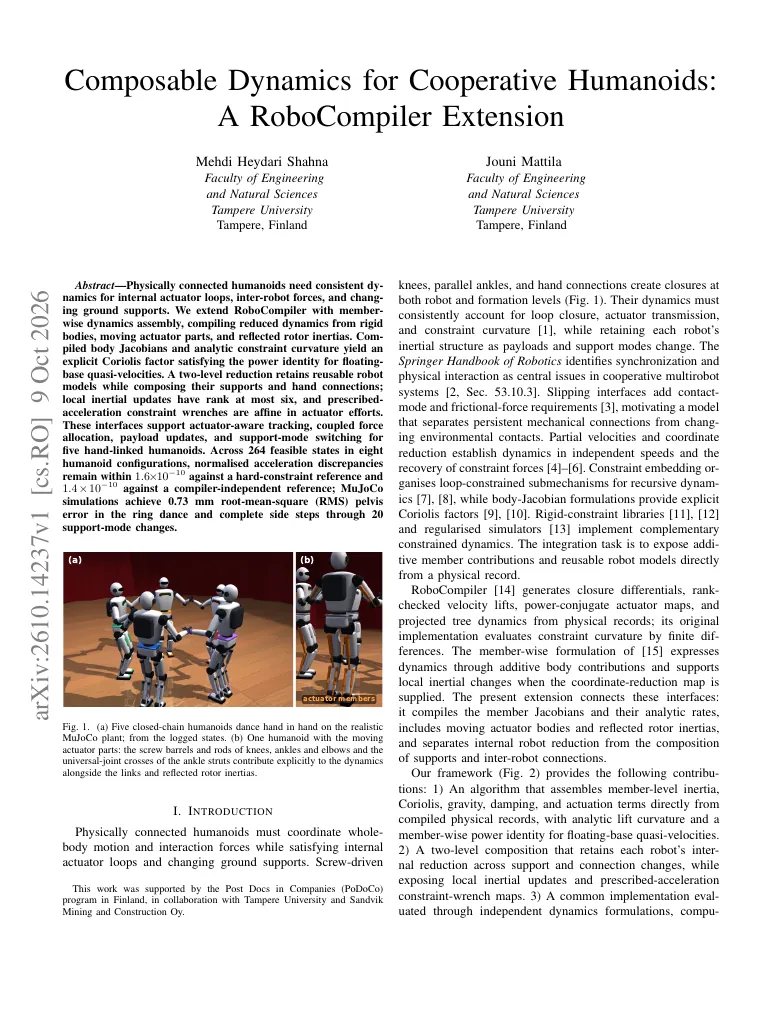
Compiles cooperative humanoid tasks into coordinated behaviors shared across multiple robots.
Separates footwork and striking from game strategy so a humanoid can play competitive table tennis.
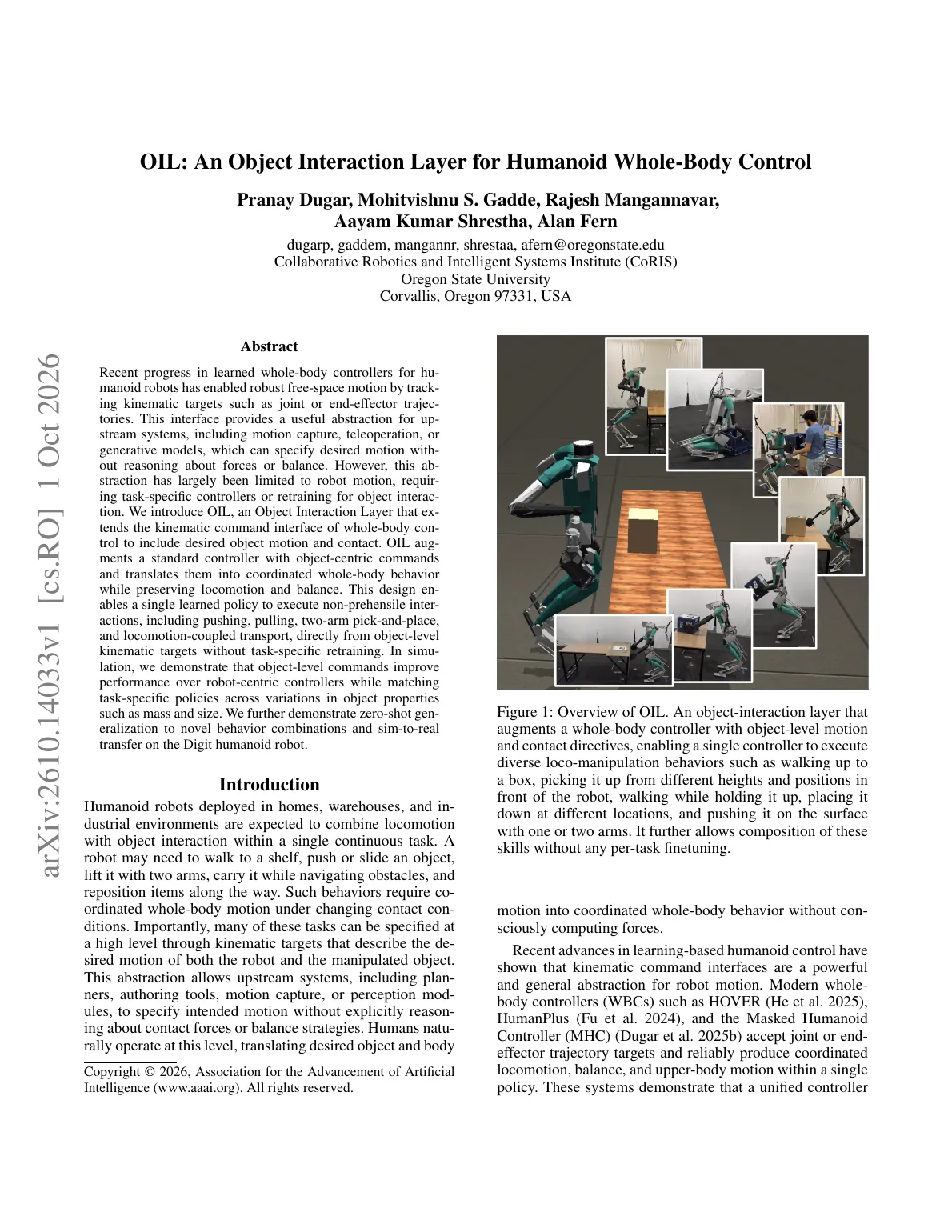
Adds a reusable object-interaction layer to whole-body humanoid controllers.
Coordinates two humanoids so they can move, take turns, and return table-tennis shots safely.
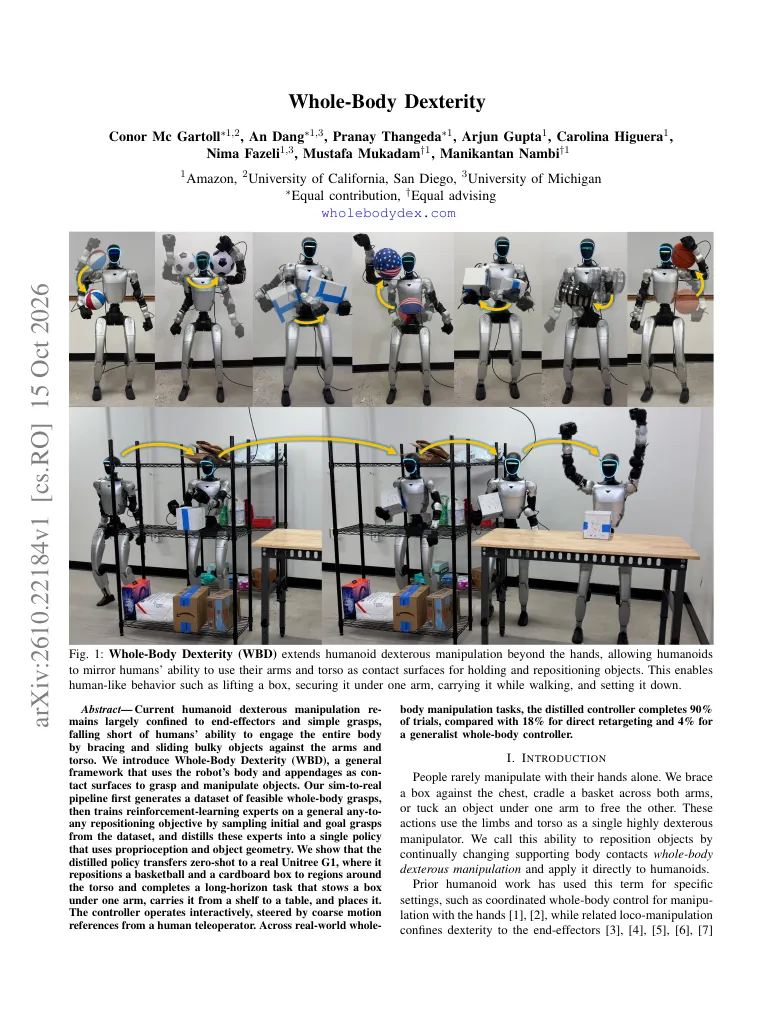
Lets a teleoperated humanoid slide and hand off objects across its arms and torso while balancing.
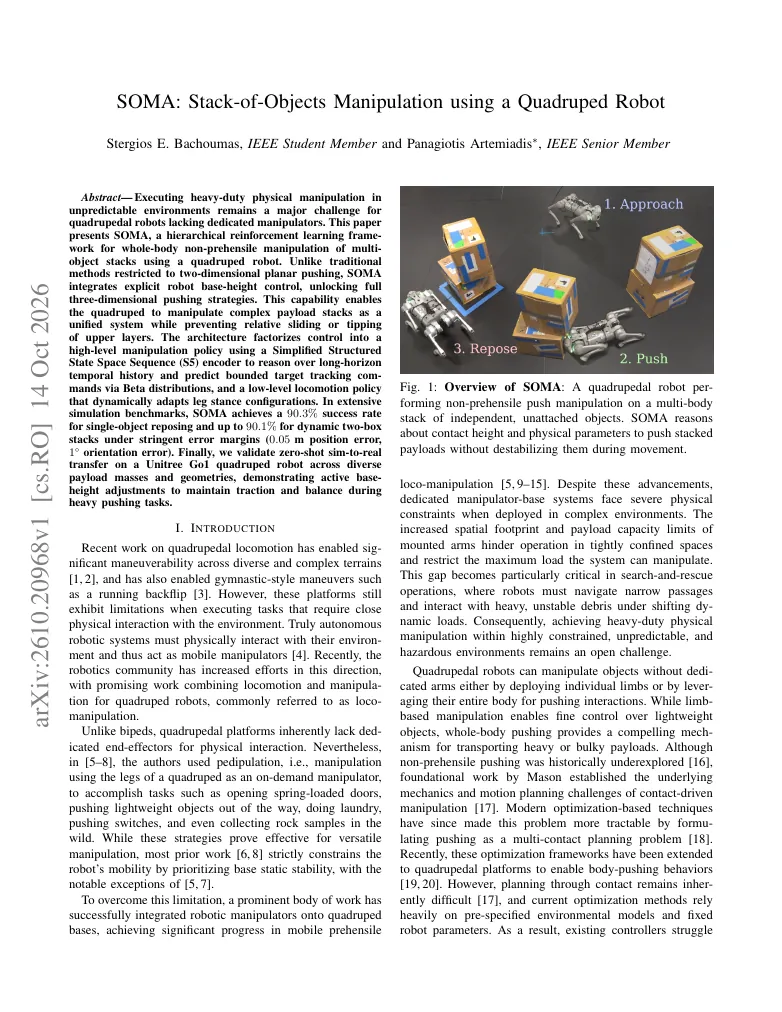
Teaches a quadruped to push stacks of unsecured objects with its body without toppling them.
MPC, impedance, safety layers, and whole-body coordination.
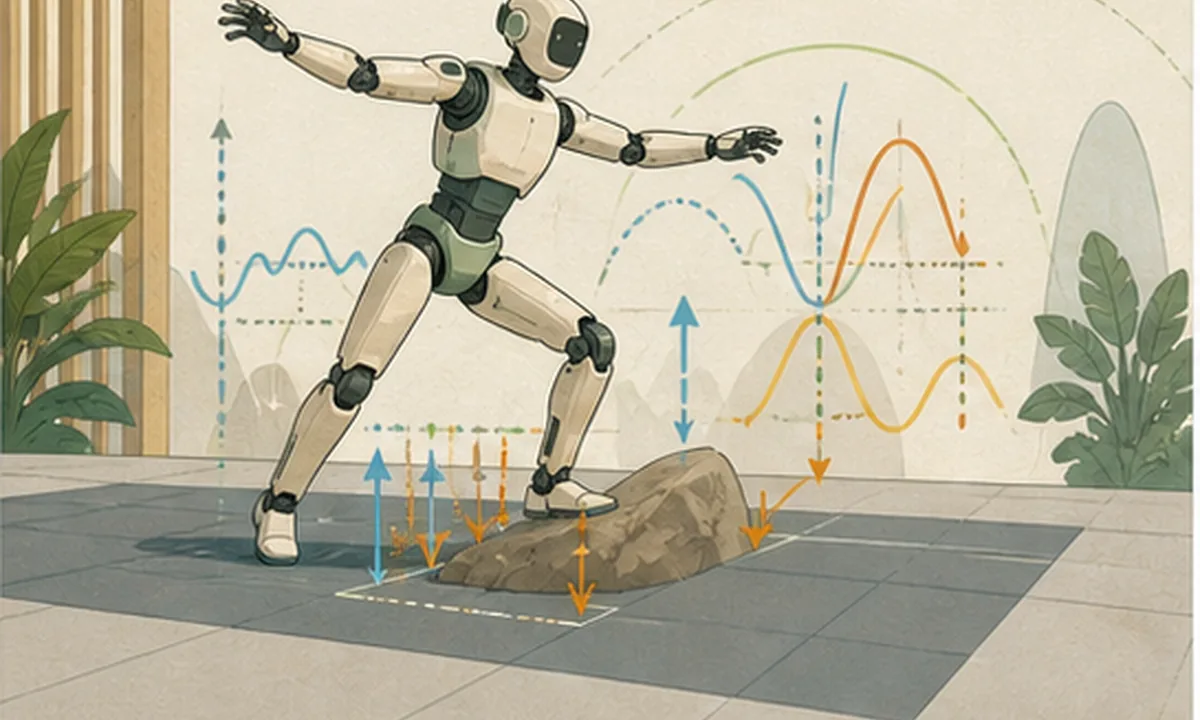
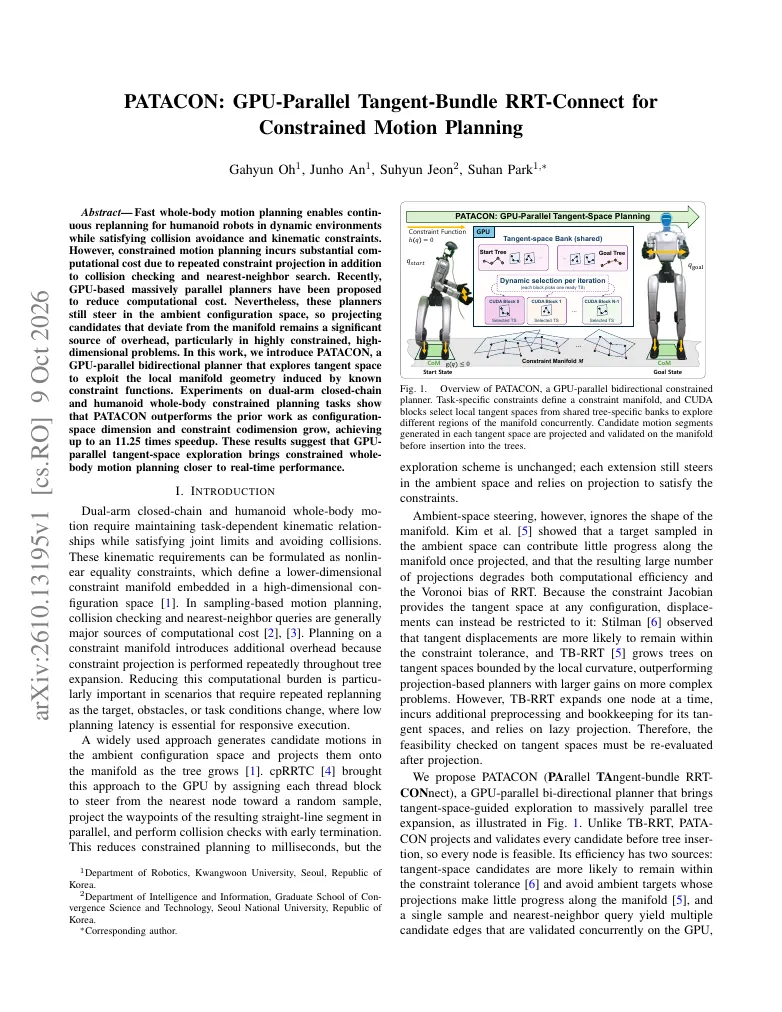
Finds fast collision-free G1 whole-body paths by planning many constrained routes on the GPU.
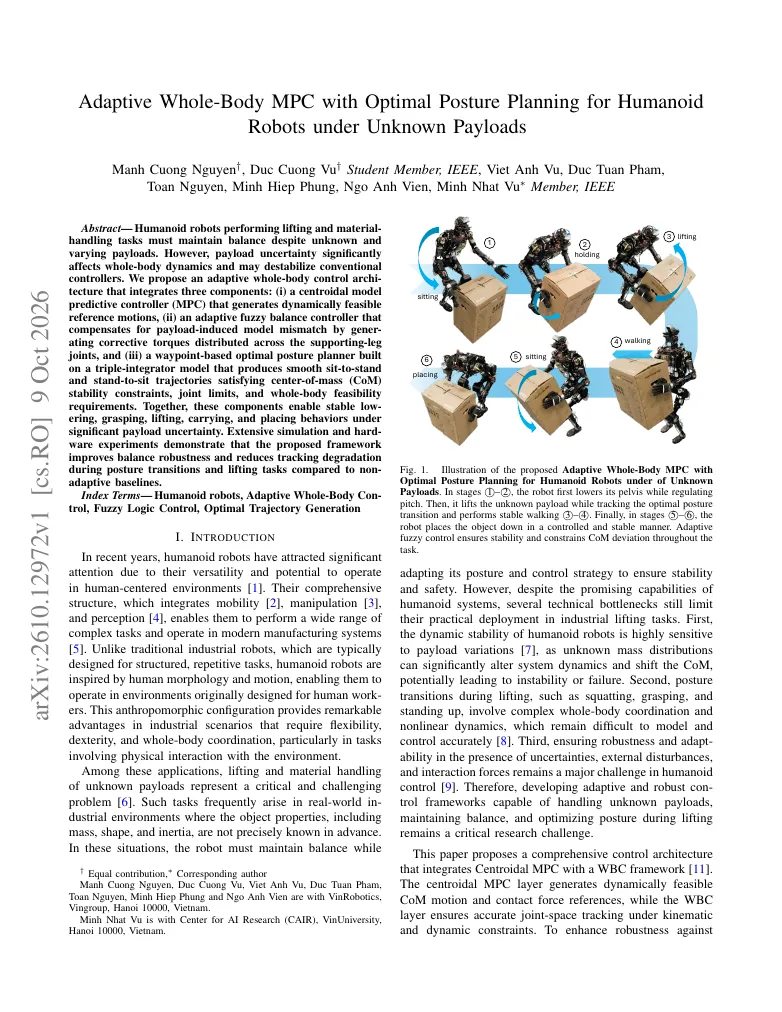
Keeps a humanoid balanced while lifting unknown loads by adapting posture and force plans online.
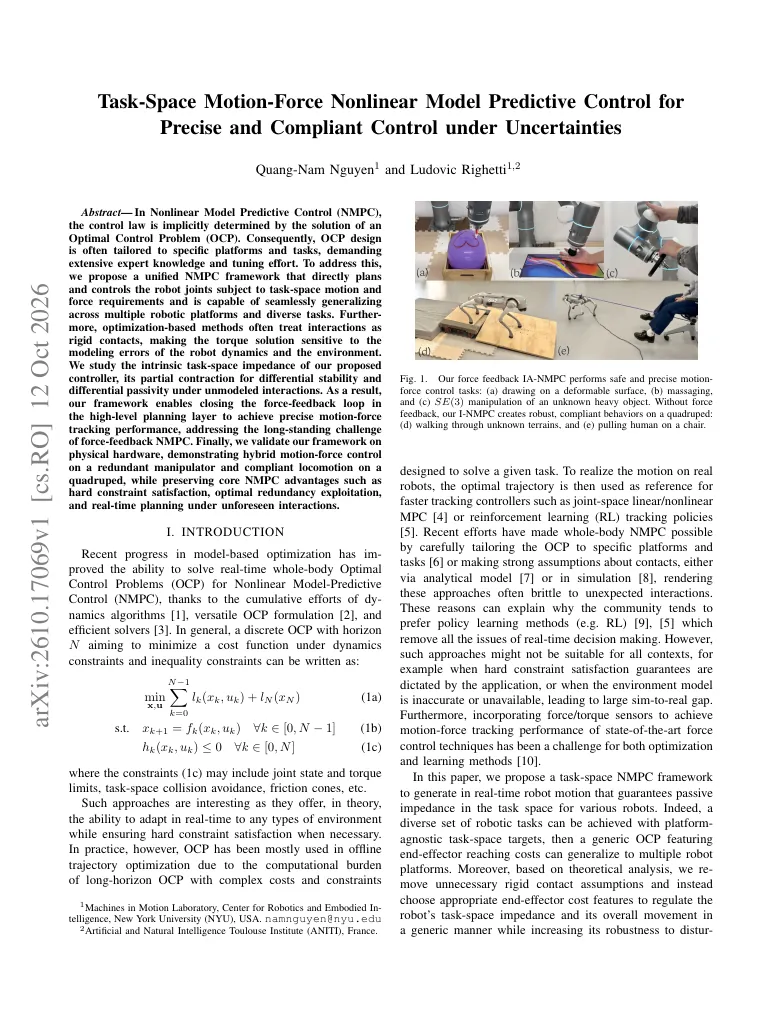
Balances motion and contact forces so legged robots stay compliant on uncertain terrain.
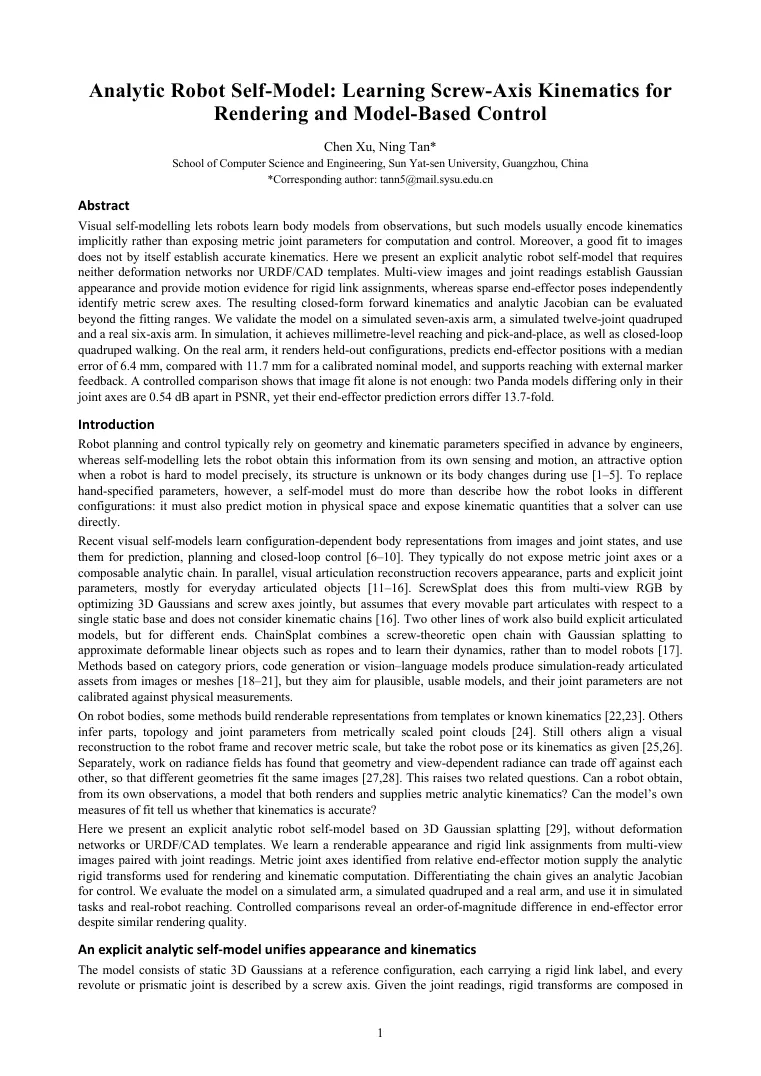
Learns an explicit robot body model that can render and control new joint configurations.
Models rigid and soft robot links together so a humanoid with prosthetic parts can move compliantly.
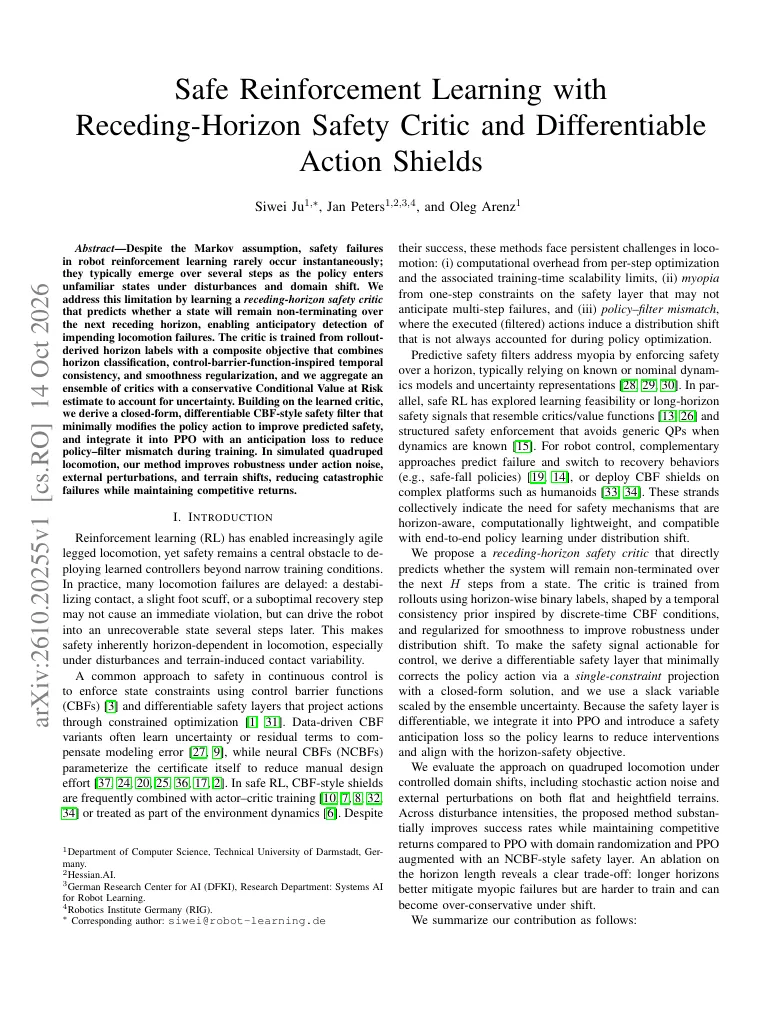
Adds a predictive safety shield that corrects unsafe quadruped actions before execution.
Learns missing actuator and contact dynamics from a few minutes of walking data to improve humanoid control.
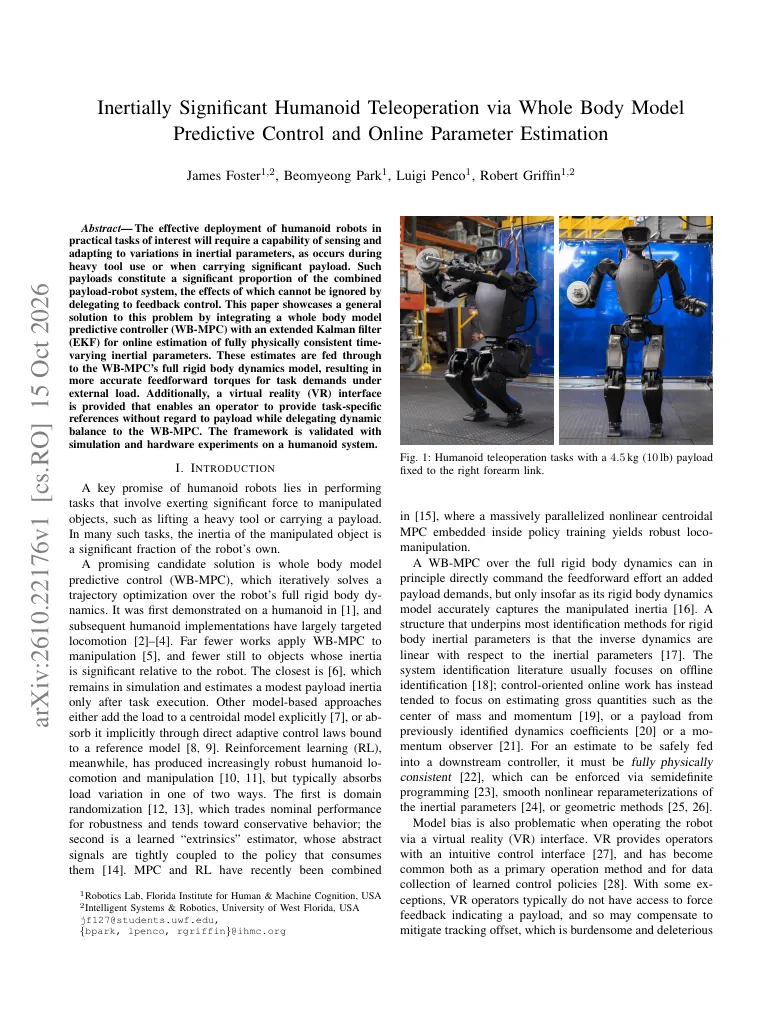
Keeps a humanoid balanced under unknown asymmetric loads by estimating payloads during teleoperation.
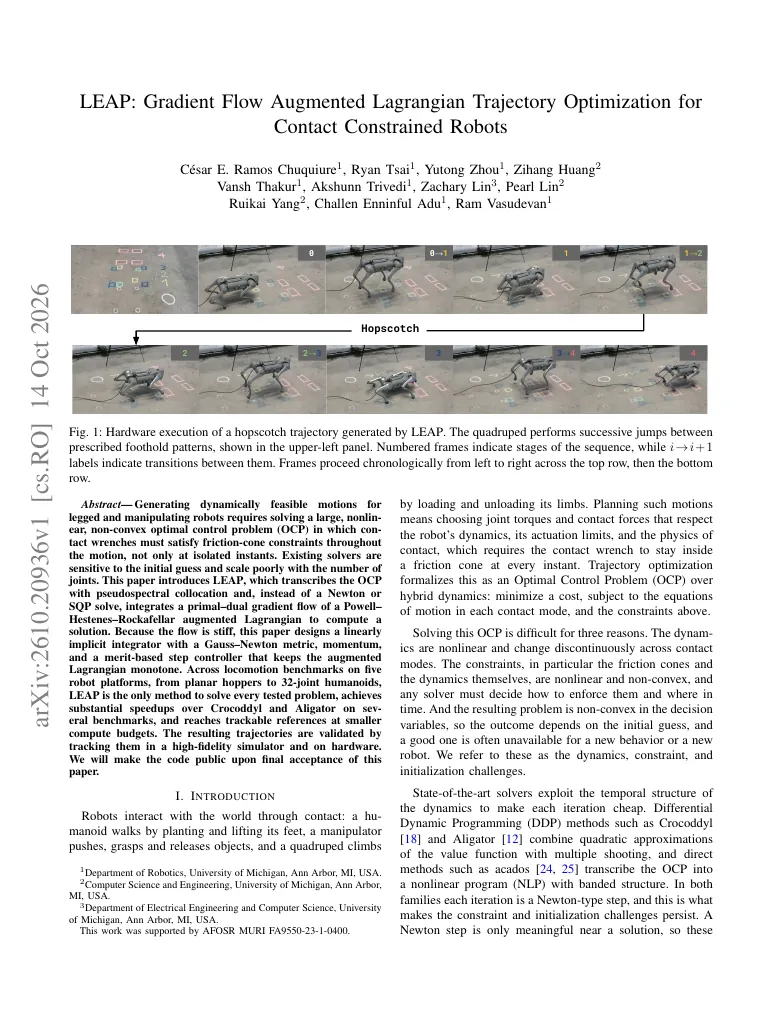
Optimizes contact-rich robot motions while continuously enforcing force and contact constraints.
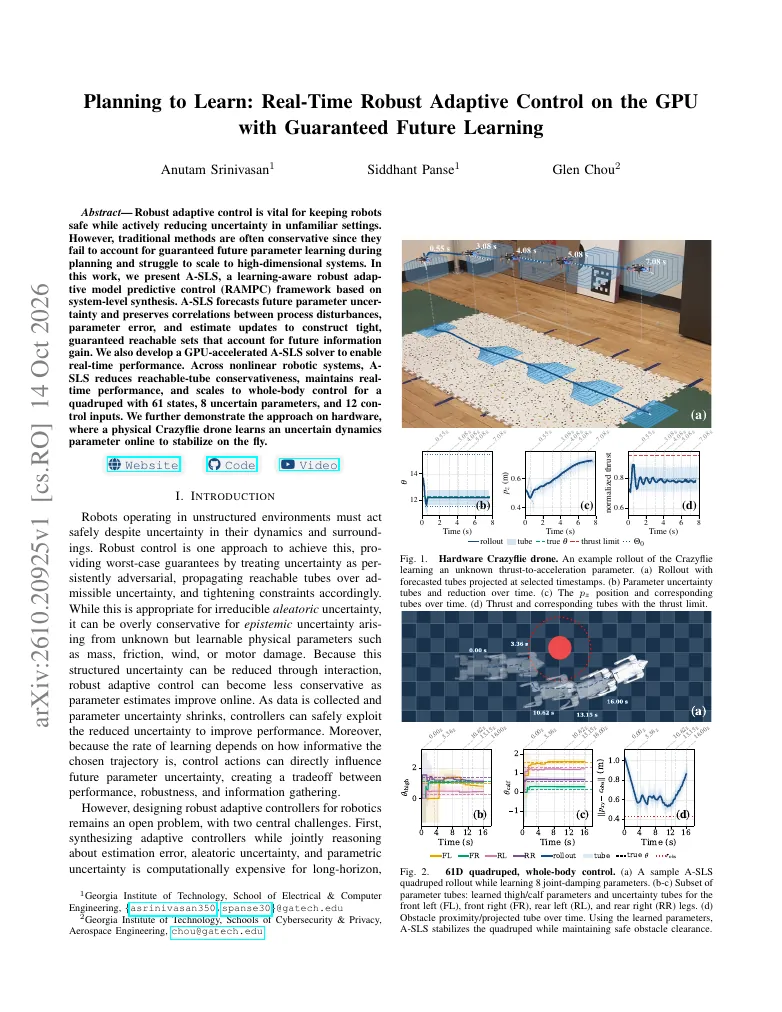
Plans quadruped actions that control the robot now while improving what it can learn next.
Refines RL-proposed humanoid motions to satisfy contact and impedance constraints.
Benchmarks, datasets, rewards, simulators, and tooling.
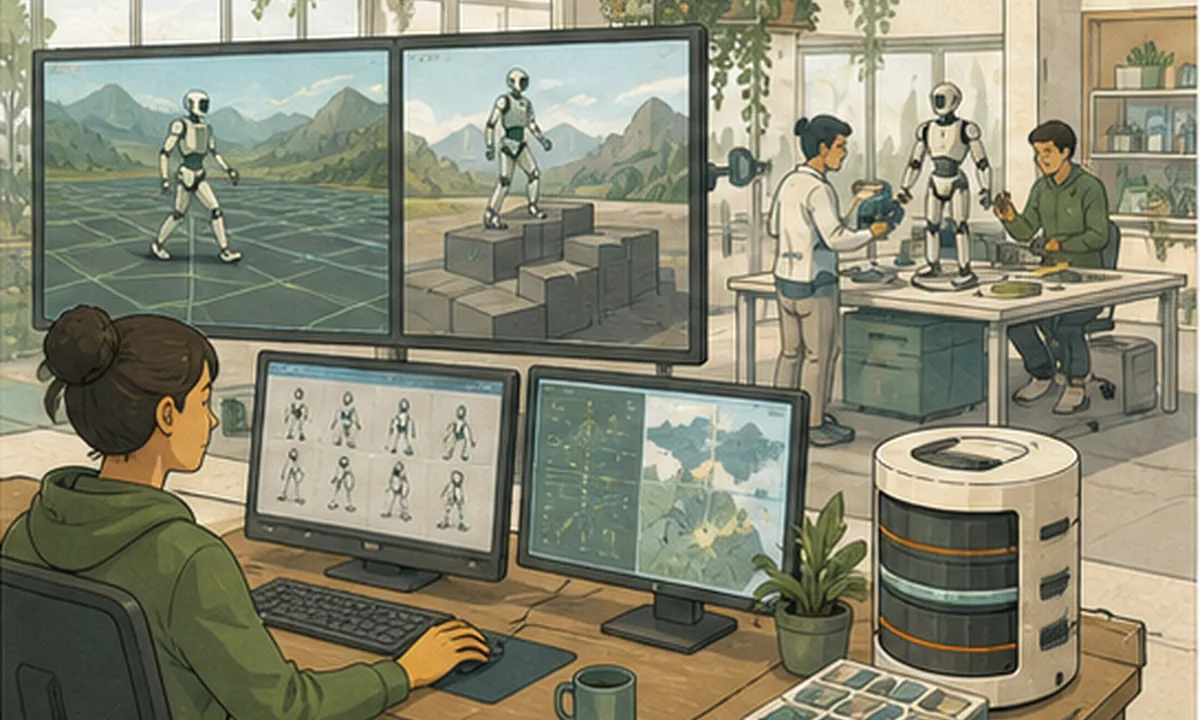
Trains locomotion policies by fitting smooth action flows directly from critic feedback.
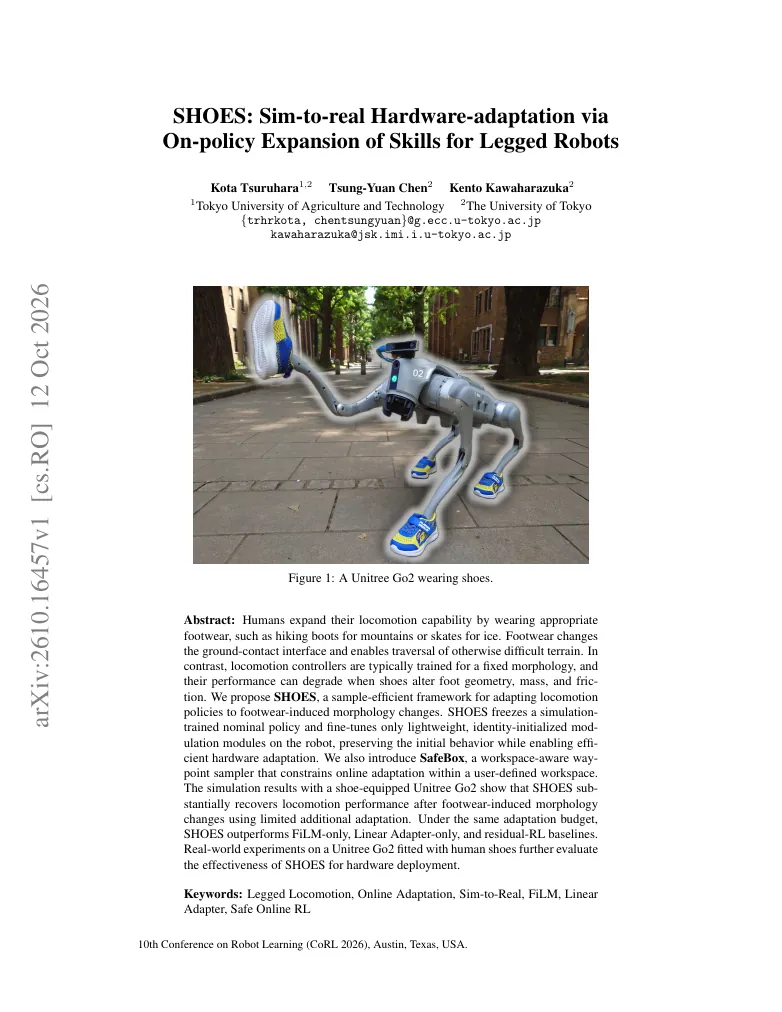
Adapts a frozen quadruped policy to hardware changes, such as wearing shoes, through short on-robot updates.
Improves a humanoid behavior model at run time by testing candidate commands before executing them.
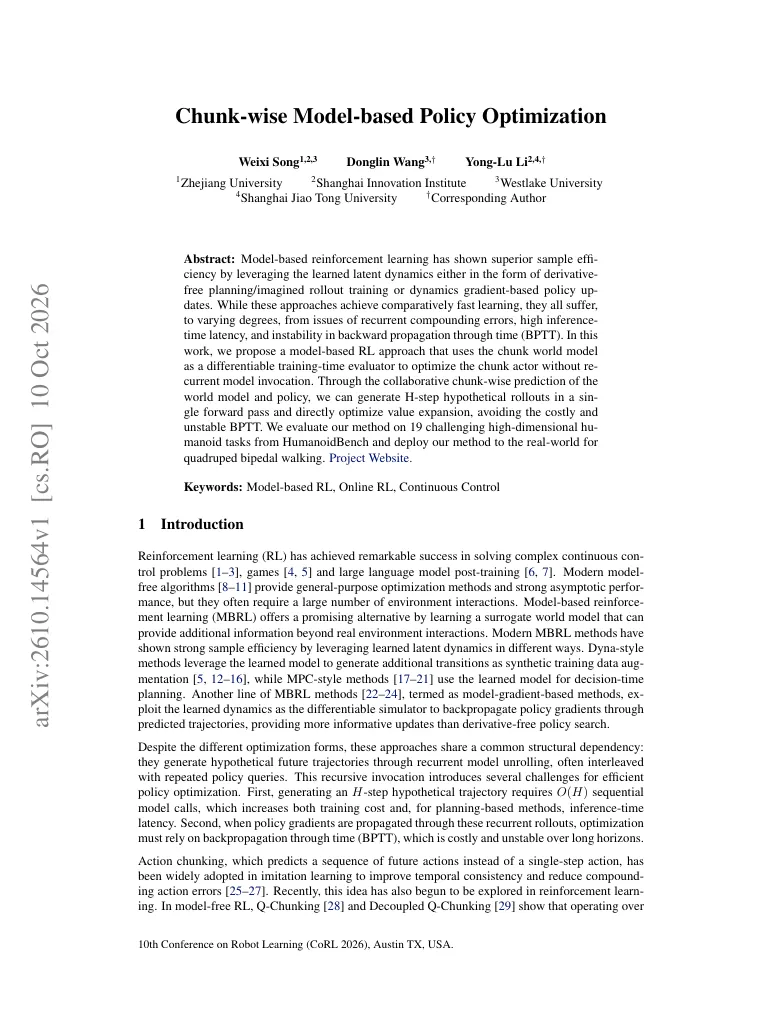
Improves locomotion policies by learning dynamics and optimizing actions in short chunks.
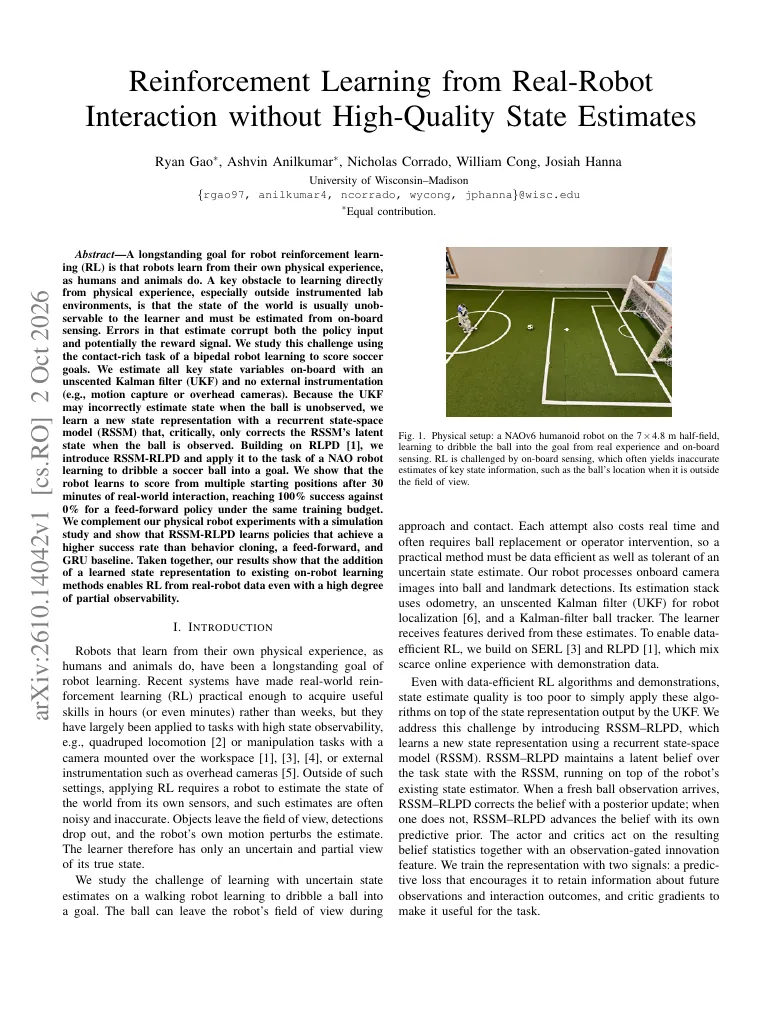
Trains robot policies from real interactions even when accurate state estimates are unavailable.
Lets an agent design, test, and revise legged robot skills automatically.
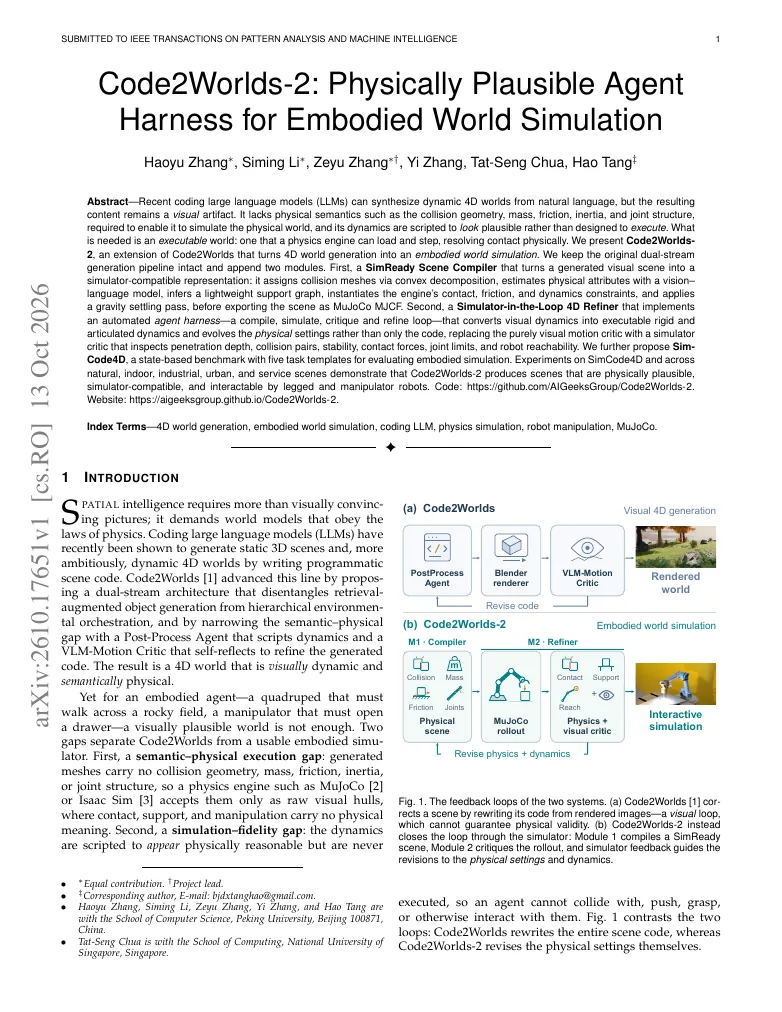
Builds physically testable MuJoCo worlds so agents can train and evaluate robot behaviors reliably.
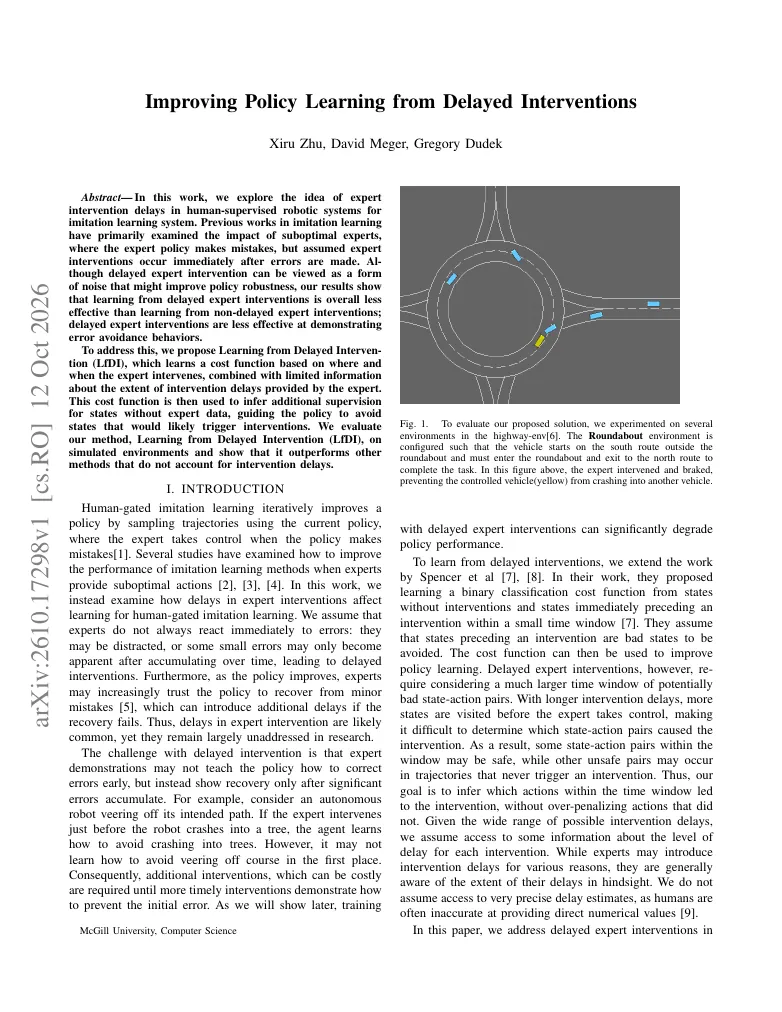
Learns better humanoid policies from human corrections that arrive late.
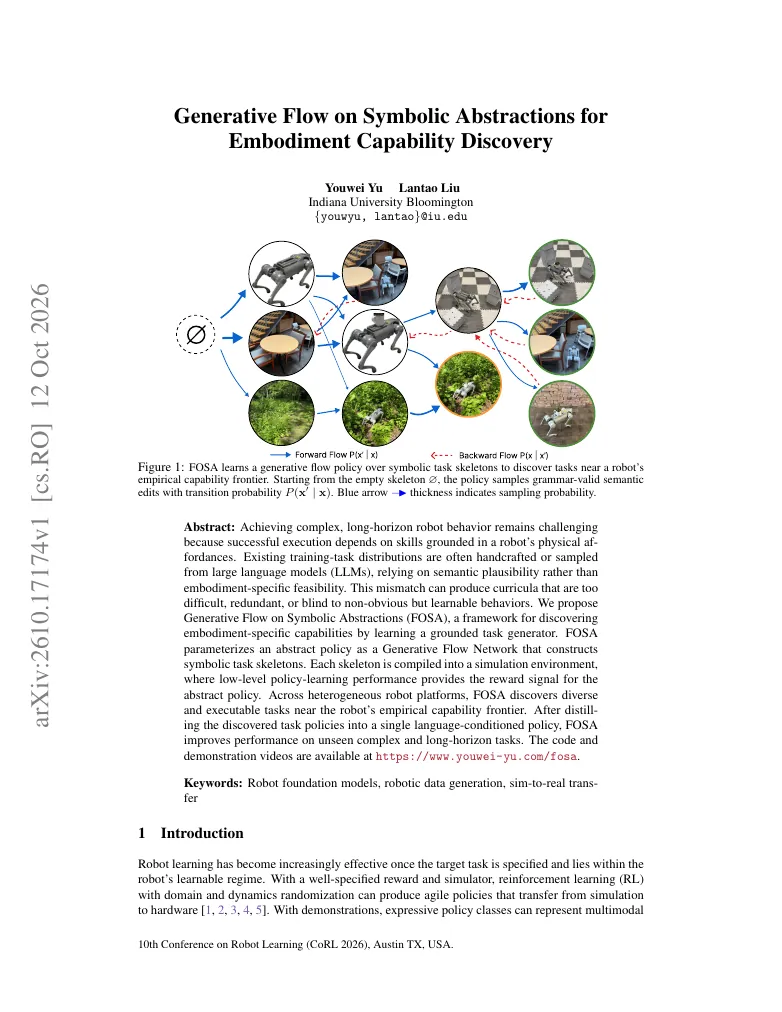
Discovers progressively harder robot skills by reasoning over what each embodiment can physically do.
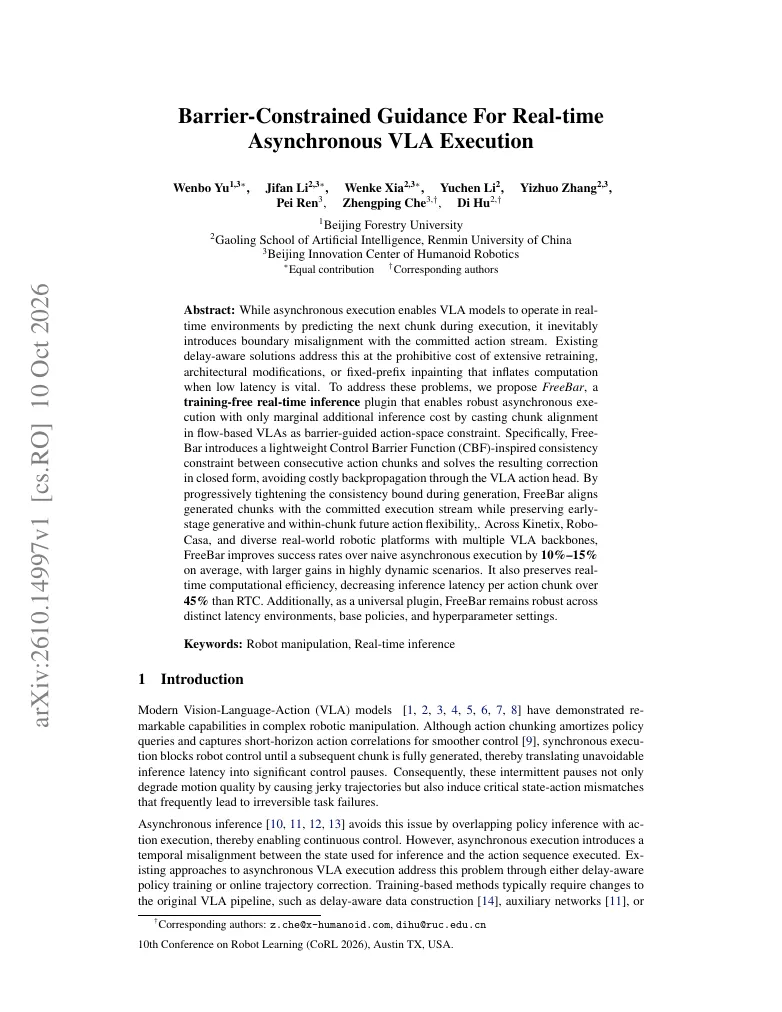
Keeps asynchronous action chunks aligned with safety limits during biped and legged control.
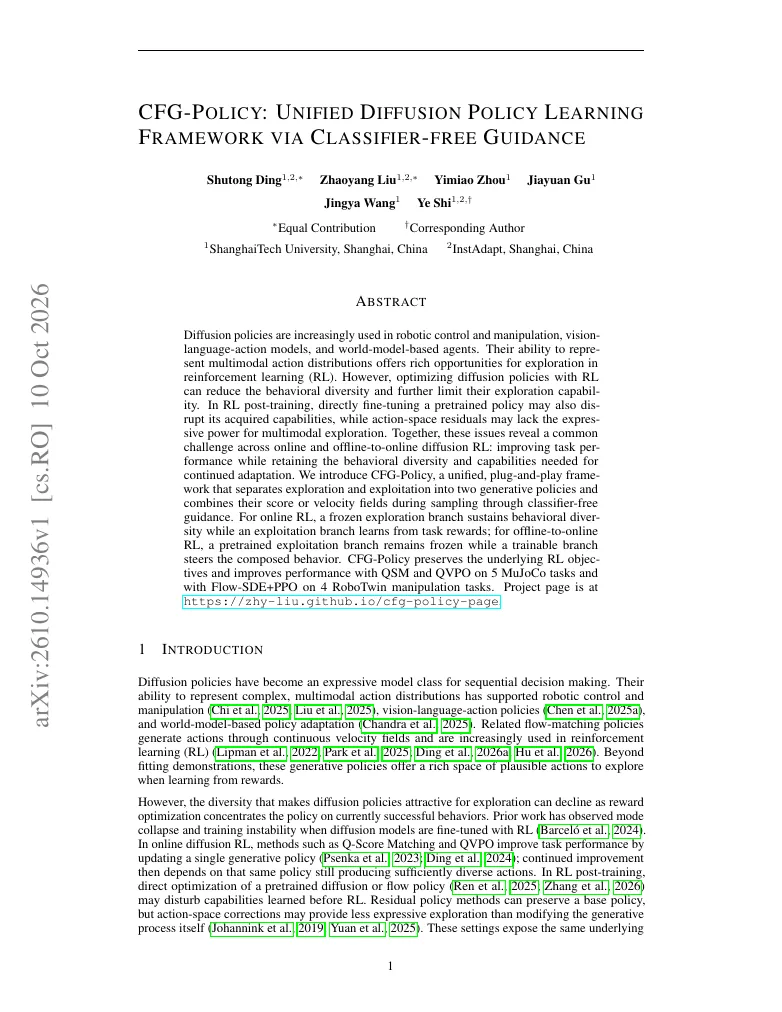
Trains diffusion-based locomotion policies while keeping exploration separate from execution.
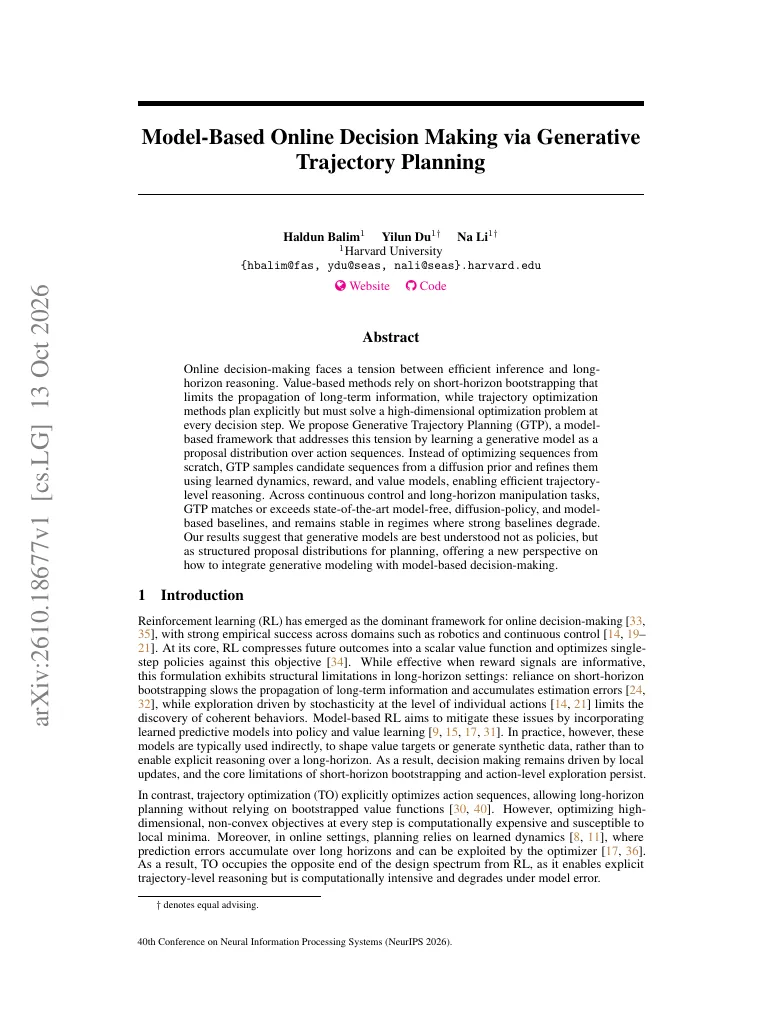
Plans complete action trajectories online to improve simulated locomotion over short horizons.
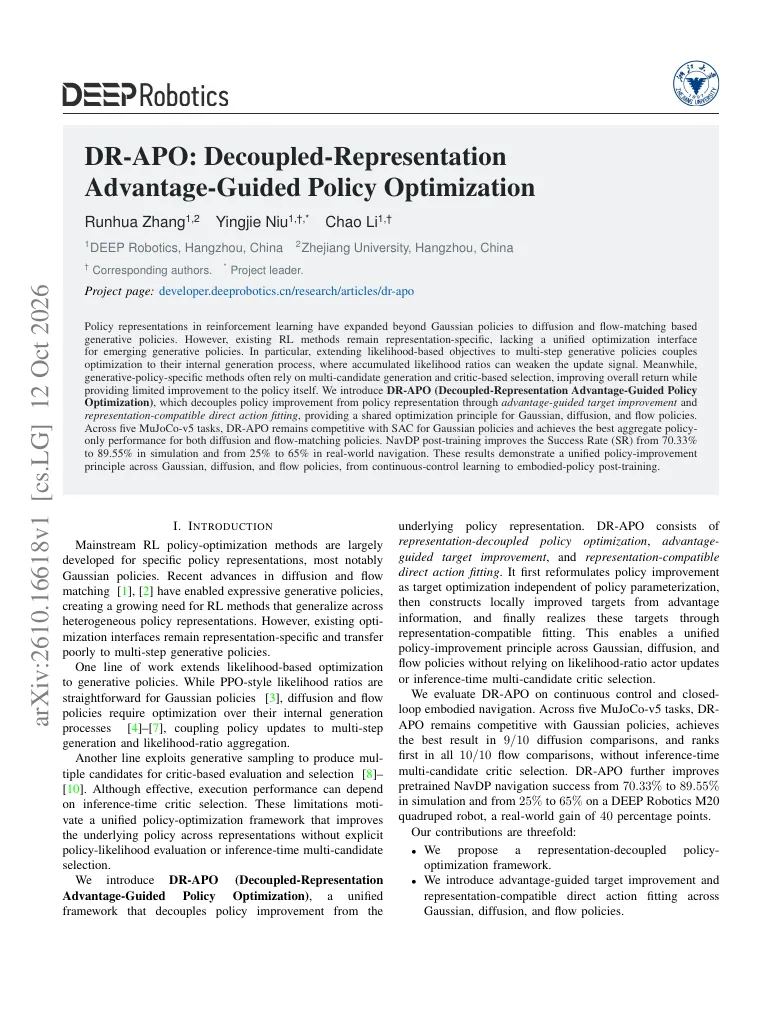
Improves locomotion policies using one update rule across several policy designs.
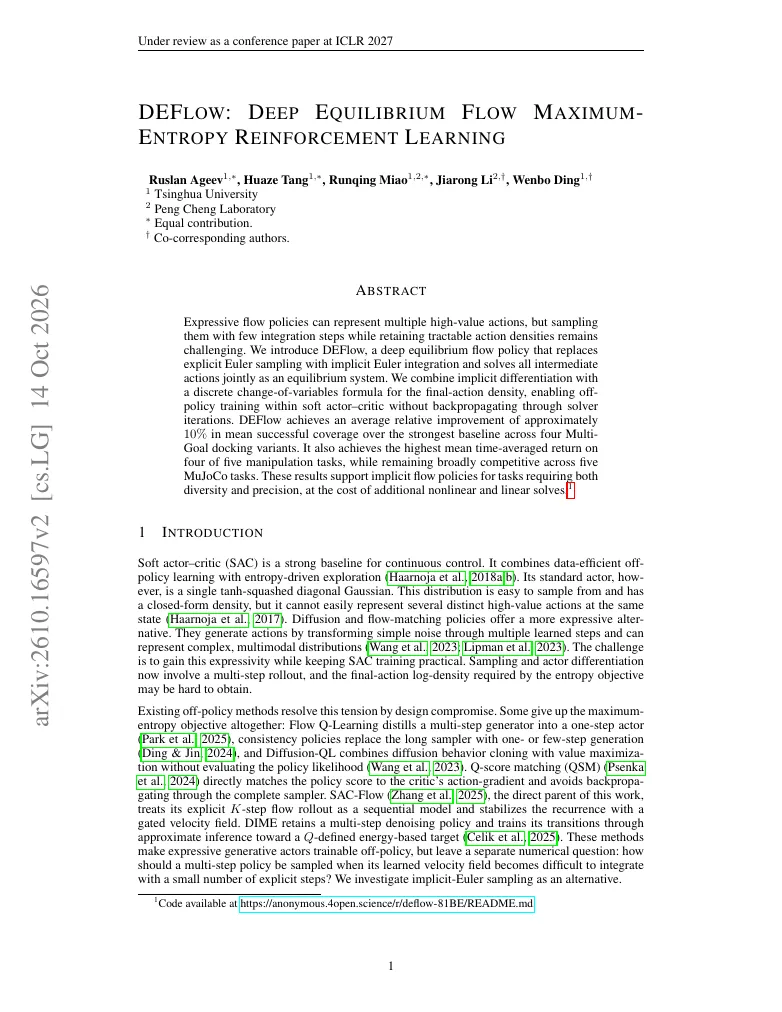
Trains flow-based locomotion policies with maximum-entropy reinforcement learning.
Generates new humanoid locomotion policies by learning the structure of existing policy weights.
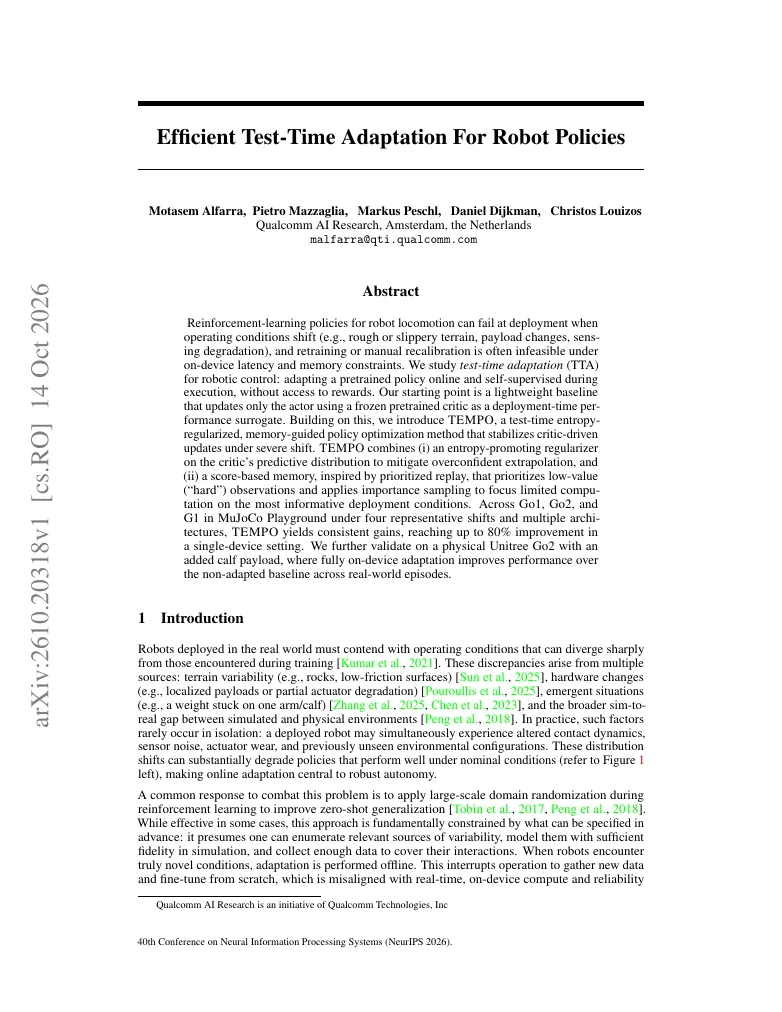
Adapts a locomotion policy during deployment using its critic, without requiring reward signals.
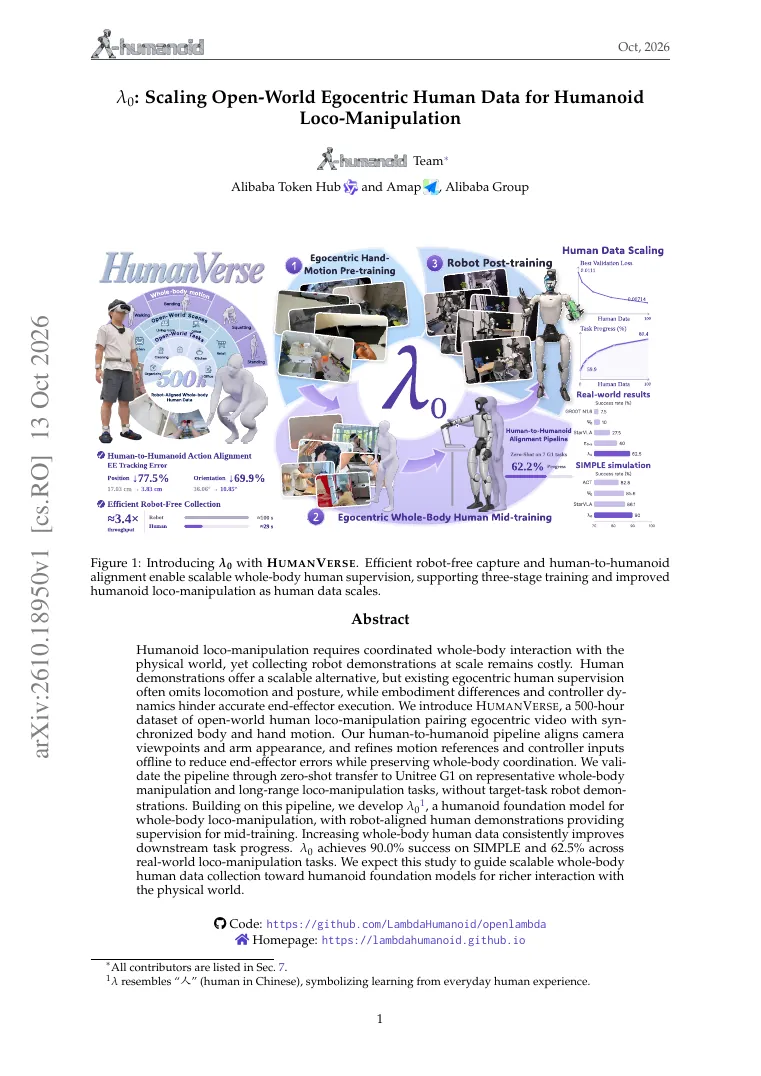
Turns large-scale human egocentric data into aligned training data for G1 loco-manipulation.
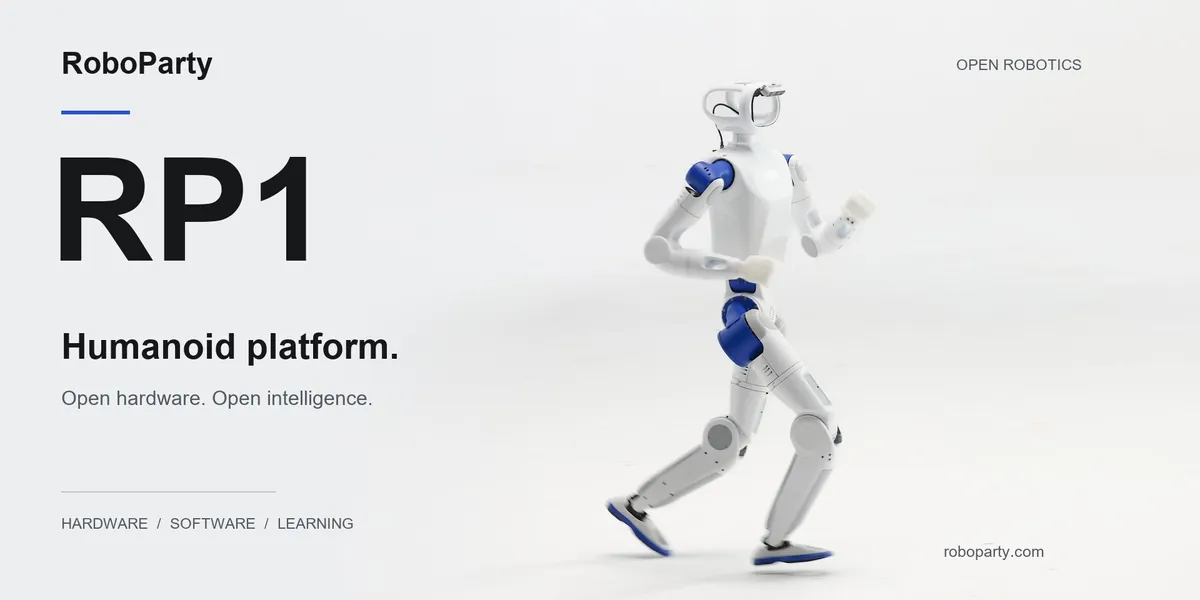
Releases editable hardware, manufacturing, and control resources for the RP1 humanoid platform.
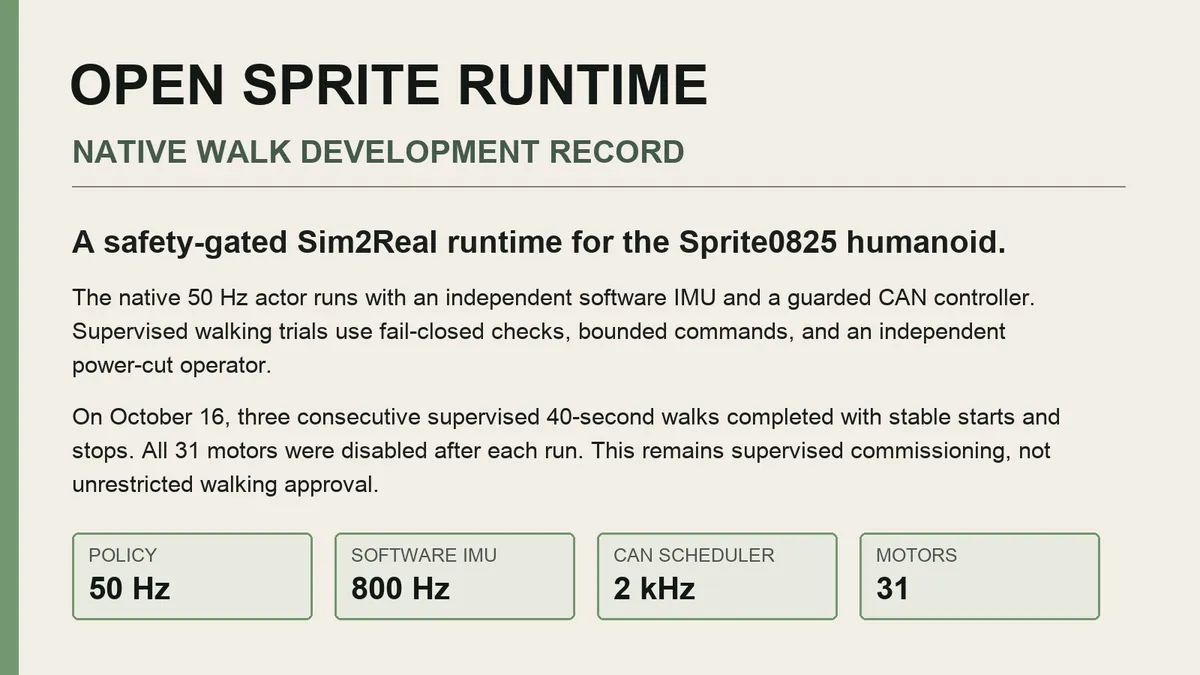
Runs supervised humanoid walking with native inference, software IMU sensing, and guarded motor control.
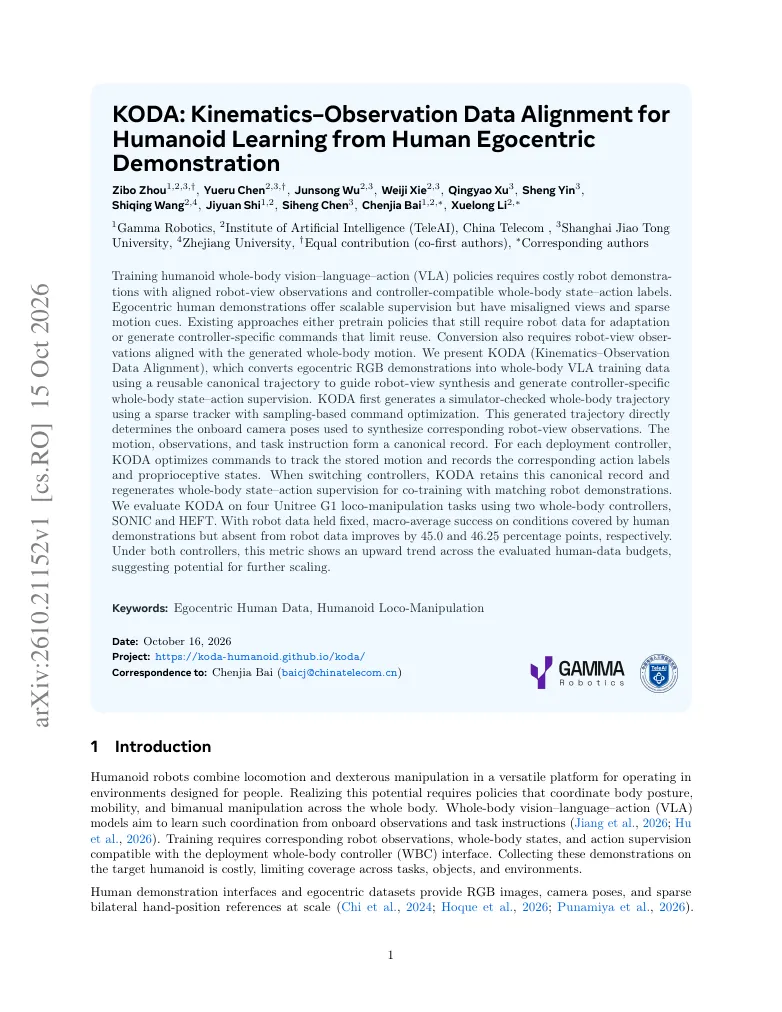
Aligns egocentric human demonstrations with G1 motion, vision, and controller-specific action labels.
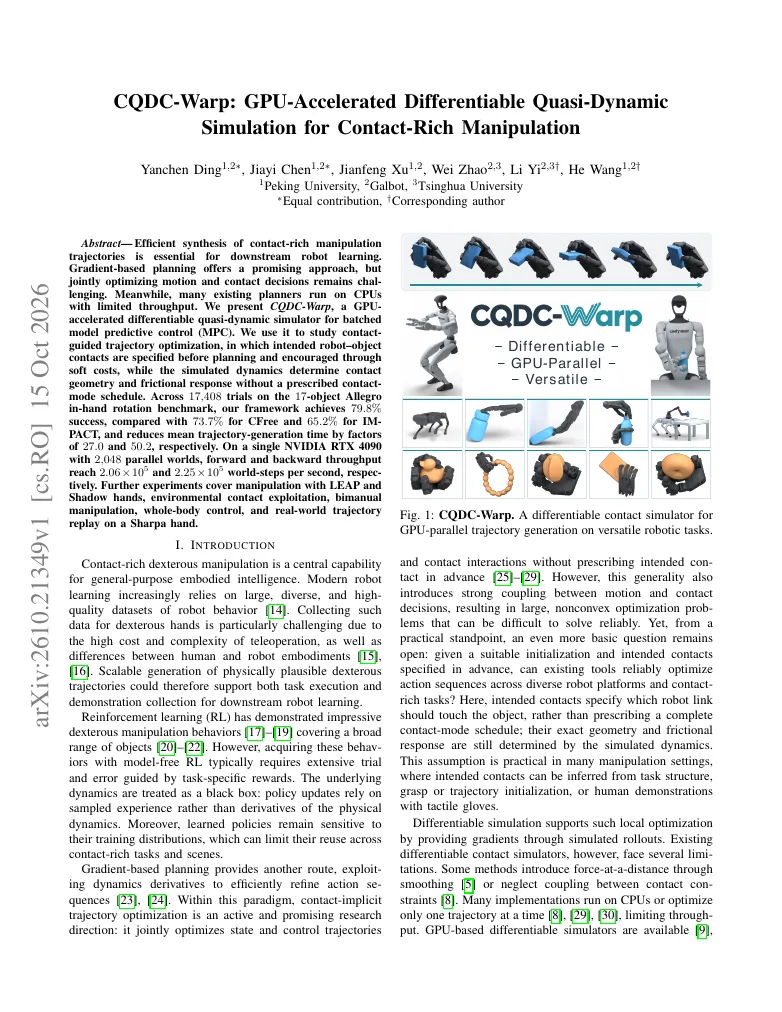
Accelerates differentiable contact simulation for recovery, mobile manipulation, and humanoid postures.
Terrain, state, slip, sensors, and local context.

Predicts how terrain and candidate actions will affect a quadruped before it moves.
Guides Digit through moving obstacles by turning LiDAR into safe corridors and footstep plans.
Lets a quadruped navigate rough spaces directly from raw LiDAR points without building a map.
Lets a quadruped adjust how much visual history it uses as terrain and motion change.
Helps quadrupeds navigate chained goals by separating route memory from immediate terrain memory.
Learns balance-safe regions that help quadrupeds navigate moving environments without tipping.
Explains how whole-body contact can help legged robots sense and cross complex terrain.
Teaches a quadruped to crawl under and steer around obstacles using depth input.